24/7 Emergency Service | Licensed & Insured | Upfront Pricing.
 Call Now: (305) 507-45-57
24/7 Emergency Service | Licensed & Insured | Upfront Pricing.
Call Now: (305) 507-45-57


Why Is Your Toilet Bubbling? 5 Causes and Your Step-by-Step Rescue Plan
When your toilet starts "talking" to you, it’s rarely a friendly greeting. That gurgling sound is a physical cry for help from your pipes. After 15 years servicing homes across Miami, we’ve learned that catching this sound early is the only thing standing between you and a literal swamp in your bathroom.
If you're in a hurry, use this "traffic light" logic to decide your next move. If you see even one "Red Light" symptom, put down the wrench and call us immediately.
🟢 GREEN (DIY Safe): Only one toilet gurgles. No water is backing up elsewhere. Drainage is slow but moving.
🟡 YELLOW (Proceed with Caution): The gurgling happens when you run the shower or laundry. Drains are sluggish throughout the room.
🔴 RED (Call a Professional): Water rises in the tub when you flush. You smell rotten eggs (sewer gas). Water is seeping from the base of the toilet.
Ignoring these red flags is a gamble. On average, water restoration costs run between $1,381 and $6,370, but a severe structural failure can easily blow past $30,000 [1].
Think of your plumbing like a giant straw. If you put your finger over the top of a straw, the water stays put because of air pressure. Your toilet gurgles because the system is struggling to "breathe."
When a blockage occurs, it creates a vacuum (negative pressure). Air trapped in the pipes desperately looks for an exit, and the easiest path is often the water seal in your toilet's U-bend (the trap). As those air bubbles force their way through the water, you get that rhythmic gurgling. It's the sound of your home's "lungs" fighting for air.
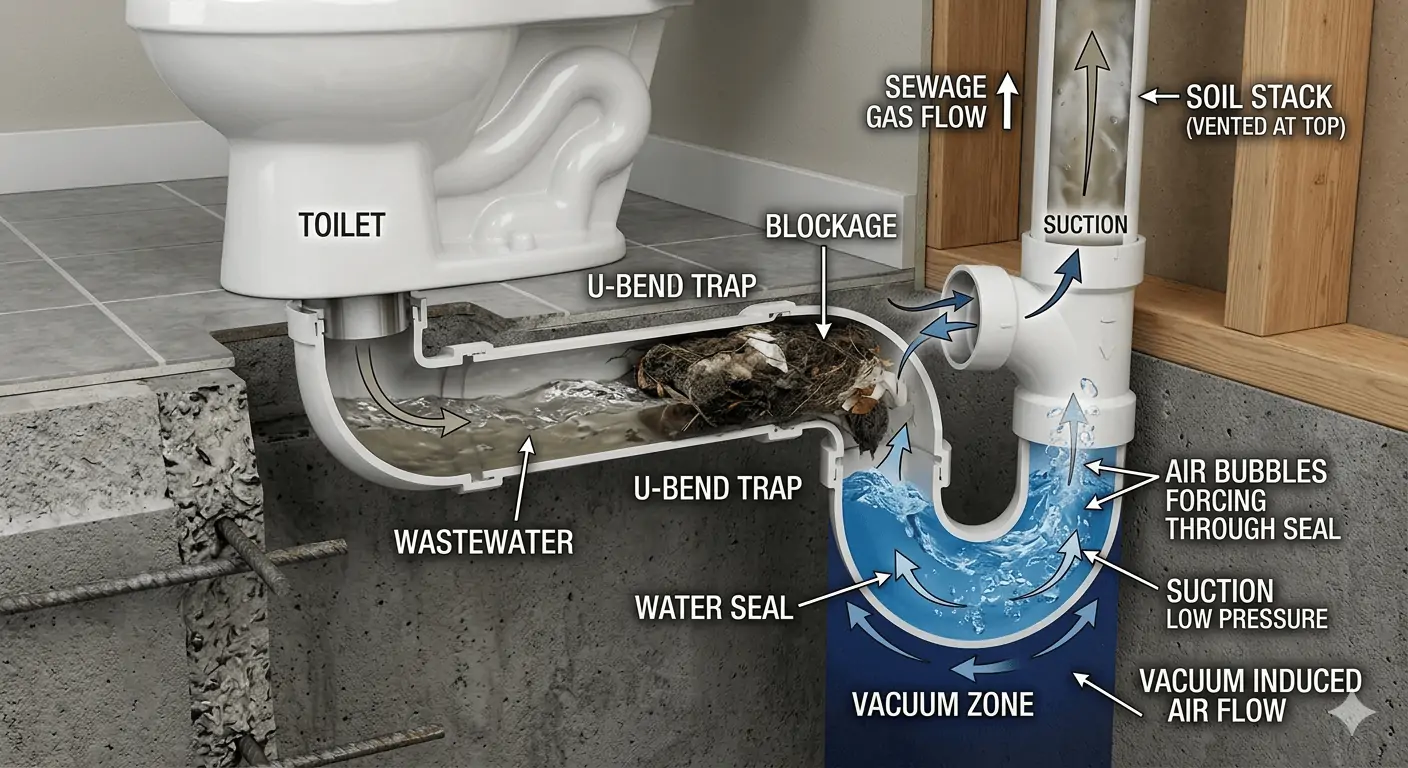
From a simple paper jam to aggressive Miami tree roots, here is what is likely happening behind your walls.
This is the "best-case" scenario. A cluster of hair, too much paper, or "flushable" wipes (which, in our experience, are never actually flushable) is caught just past the bowl. It's not a total wall, but it's enough to mess with the airflow.
Your plumbing has a "chimney" on the roof that lets air in and sewer gas out. In South Florida, these frequently get clogged with bird nests, leaves after a tropical storm, or even stray iguanas. When the vent is blocked, every flush creates a vacuum that sucks air through your toilet instead of the roof.
This is the heavy hitter. If the main line—the "highway" for all your home's waste—is blocked, the whole system fails. In older Miami neighborhoods, we often see this caused by aging galvanized steel pipes, which tend to corrode and fail after just 15 to 30 years [5]. Modern PVC or cast iron might give you 50 to 100 years, but nothing lasts forever [5].
| Symptom | Local Clog | Main Line Issue |
|---|---|---|
| Scope | Only one toilet gurgles | Every drain in the house is slow |
| Backup | None or stays in the bowl | Sewage appears in tubs or showers |
| Cause | Debris/Paper | Tree roots or pipe collapse |
| Repair Cost | ~$500 - $5,000 for pro cleaning [3] | Average $3,319 ($1,390 - $5,320 range) [2] |
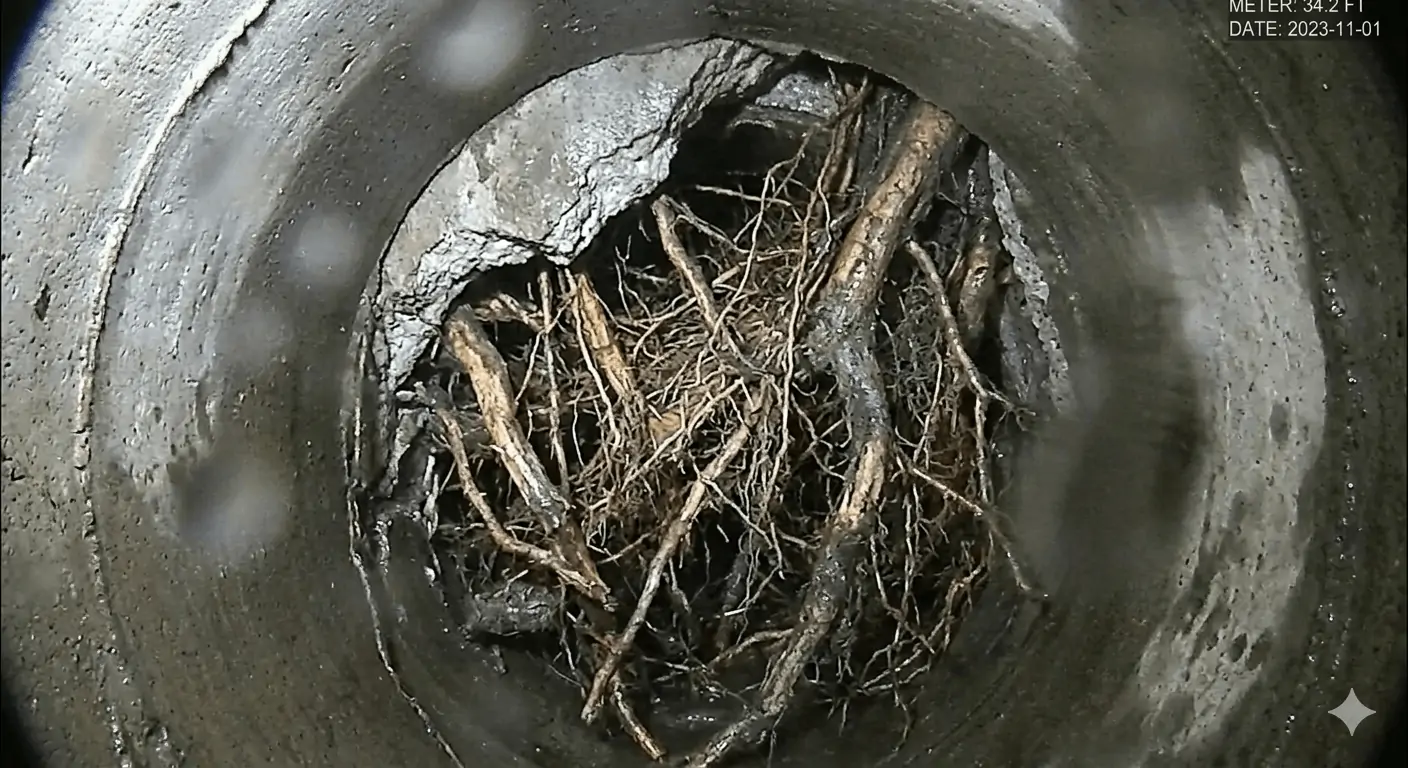
If you aren't on city sewer, a gurgling toilet is often the first warning that your septic tank has reached capacity or the drain field is saturated.
Sometimes, the original installation didn't get the "fall" (the downward angle) right. If pipes are too flat, air pockets become a permanent, annoying feature of your home until the plumbing is re-pitched.
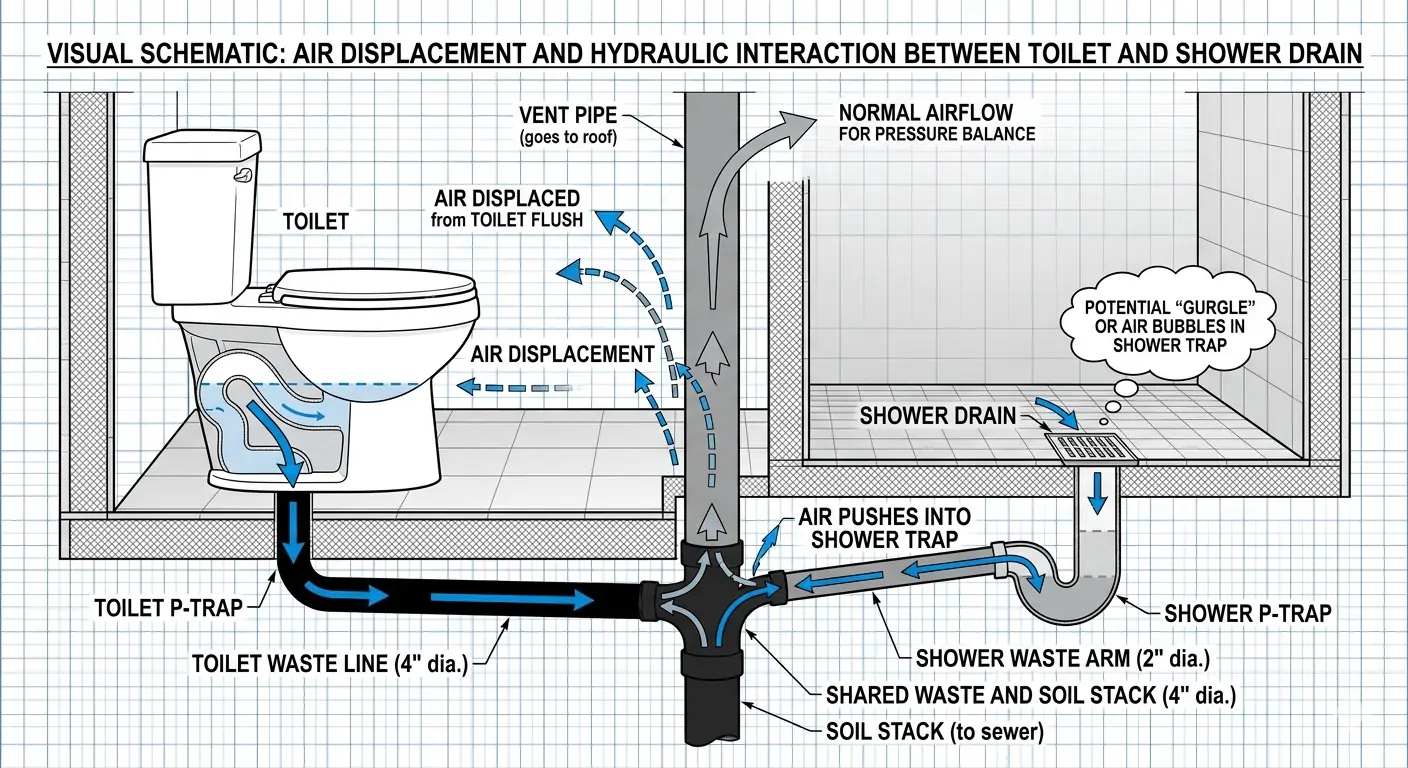
This is a classic case of "shared plumbing." Your shower and toilet often share a drain line. When your washing machine dumps a huge volume of water, it fills the pipe like a moving wall. If your vent stack is even slightly restricted, that wall of water pushes air ahead of it. Since the air can't escape through the roof, it bursts up through your toilet bowl. We call this the "Wet Vent" effect.
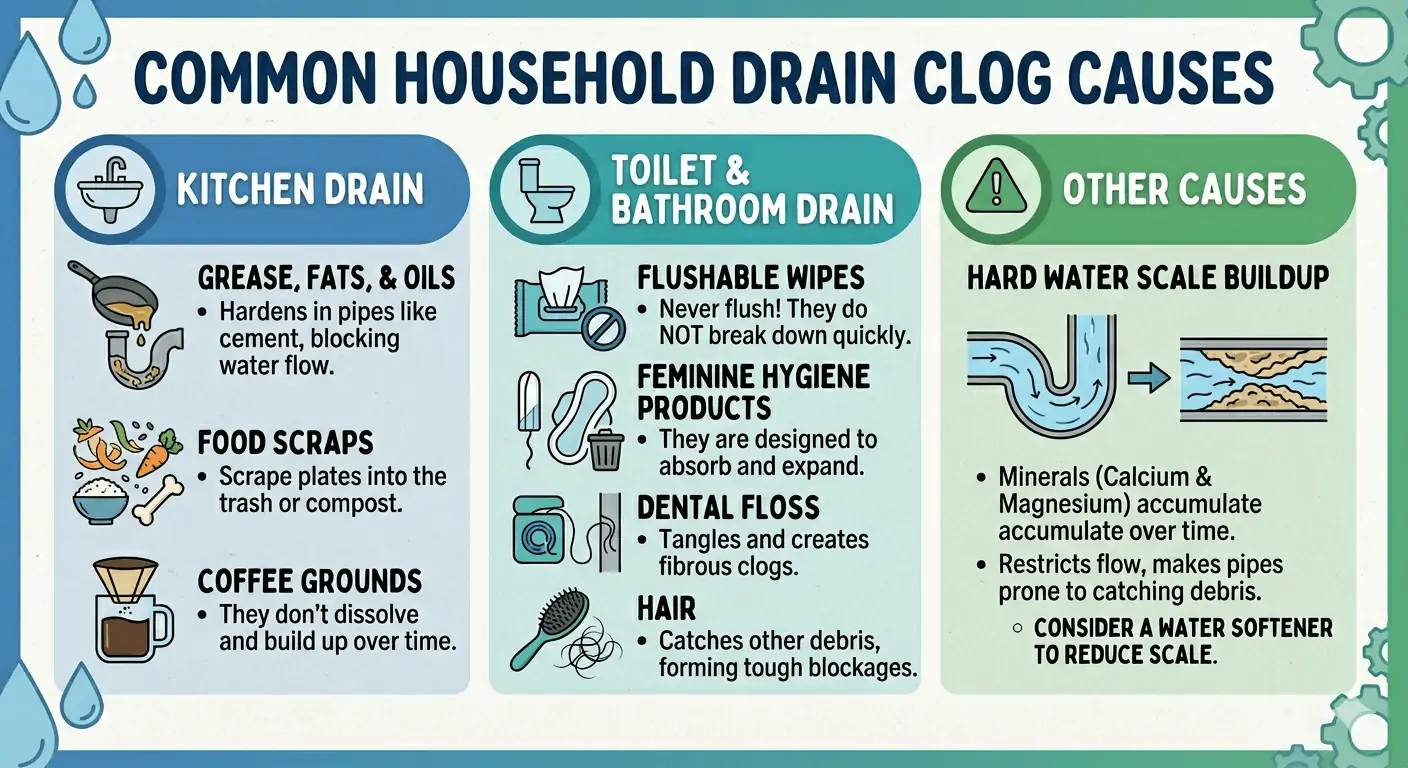
If you've checked the "Red Flags" and your situation is green or light yellow, you can try these steps. Expect to spend 15-30 minutes.
Don't just splash water. You need a flange plunger (the one with the extra rubber sleeve on the bottom).
You're using water pressure to hammer the clog loose. For homes with old pipes or heavy tree canopy, we often recommend a professional hydro-jetting (high-pressure water cleaning) to return the lines to "factory clean" status [4].
If the plunger fails, use a "snake."
*Pro Tip: Be gentle. You don't want to scratch the porcelain and leave permanent marks in your bowl.*
If you're comfortable on a ladder, check the vent stack on your roof.
We respect a proactive homeowner, but there is a line where DIY becomes a liability. Stop immediately if:
We know that "glub-glub" sound from the bathroom can make your stomach sink. It's the uncertainty that's the worst—not knowing if you're looking at a five-minute fix or a five-thousand-dollar nightmare. But remember: your plumbing is a logical system, and every sound it makes is just a data point. Whether you're grabbing the plunger or calling in the team, you're taking control of your home's health. If you've tried the steps above and that "talking" toilet won't shut up, don't sweat it. Give us a call, and we'll get your home breathing easy again.
[1] Water Damage Cost Guide 2024 — https://swivl.tech/cost-guide-customer/water-damage
[2] Sewer Line Repair Cost Analysis (2025) — https://www.vevor.com/ru/diy-ideas/how-much-does-it-cost-to-fix-a-sewer-line/
[3] Sewer Backup and Cleanup Costs — https://brewersewer.com/blog/sewer-backup-repair-cost/
[4] Storm Drain and Maintenance Frequency (2026) — https://contractorplus.app/fr/resources/construction-costs/repair-storm-drain/national-average
[5] Service Life of Pipeline Materials — https://www.stout.ru/articles/srok-sluzhby-kanalizacionnyh-trub/
[6] Chemical Reaction Volume: Soda & Vinegar — https://uchi.ru/otvety/questions/v-reaktsiyu-vstupayut-5-gramm-pischevoy-sodi-i-15-ml-9-uksusnoy-kisloti-kakoy-obem-gaza-v

 Verified by Carlos Rivera