24/7 Emergency Service | Licensed & Insured | Upfront Pricing.

Call Now: (305) 507-45-57

Who To Call When Basement Floods

Updated on May. 08, 2026 Viewed 75 times

We have spent 15 years wading through flooded basements across Miami, and we know exactly what is going through your head right now: *How much is this going to cost, and how do I make it stop?*

Highlights
  • Safety First Protocols: Before addressing the leak, neutralize immediate hazards. Shut off the main water valve, kill the power at the breaker (unless standing in water), and turn off the gas if appliances are submerged.
  • The Professional Sequence: Start with an electrician to ensure the structure is safe from "stray voltage," followed by an emergency plumber to stop the source, and finally a restoration specialist to extract water and sanitize.
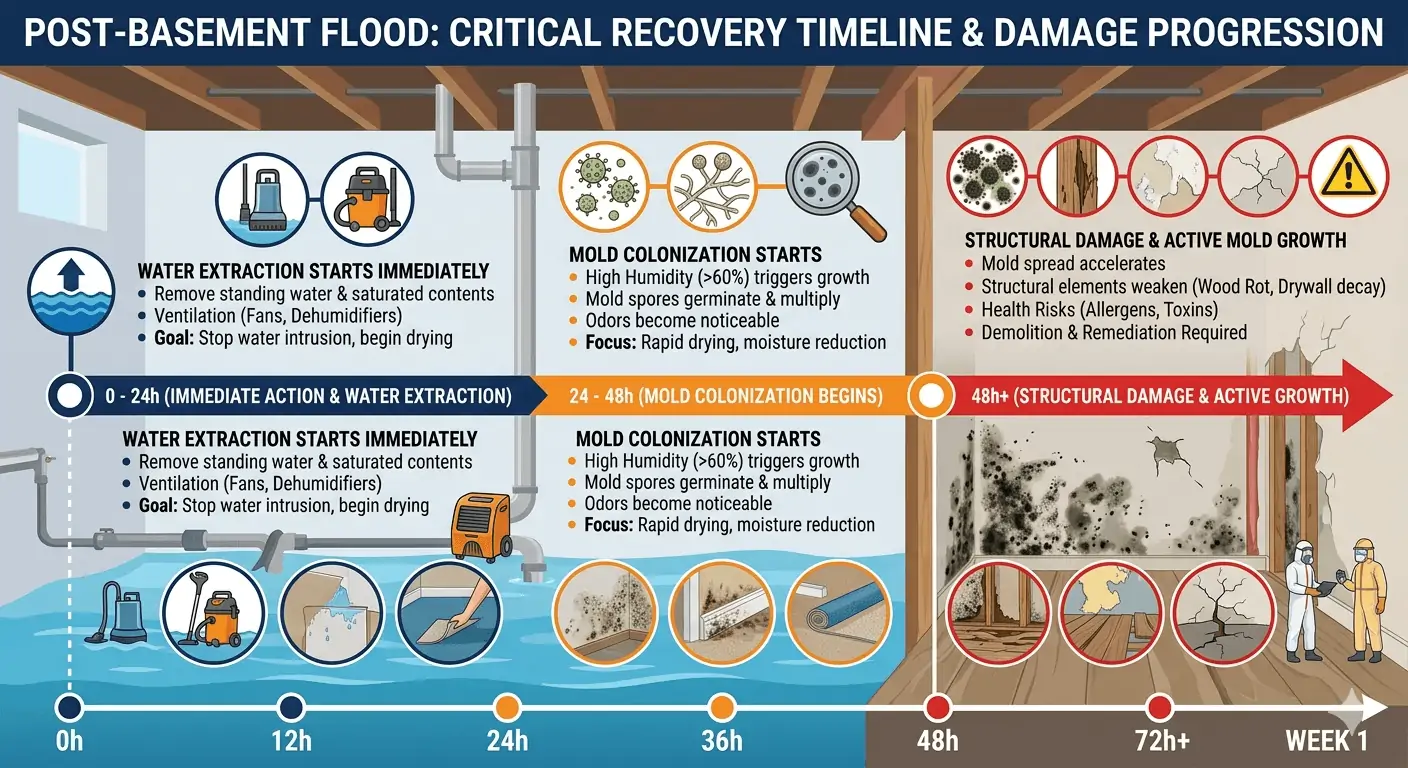
  • The 48-Hour Mold Window: Professional drying equipment must be deployed within 24 to 48 hours. DIY efforts with box fans rarely reach moisture trapped in wall framing, often leading to expensive mold remediation later.
  • Evidence for Insurance: Do not start cleaning until you have documented everything. Take at least 20 photos, including a "money shot" of the water line against a ruler to prove the exact depth of the flood.
  • "Black Water" Warning: If the flood involves sewage or storm runoff (Category 3), avoid all contact. These waters contain hazardous bacteria and chemicals requiring professional hazmat gear for safe removal.
  • Contractor Vetting: Avoid "storm chaser" scams by ensuring your restoration team is IICRC certified and uses Xactimate software, which ensures the estimates are compatible with insurance company standards.

Quick Decision Guide: Who to Call First?

If you are looking at your phone right now, use this logic:

  • Smell gas or see structural cracks? Call 911 and the gas company immediately. Get out of the house.
  • Water is touching outlets or the breaker box? Call an Electrician before you step into the water.
  • Water is spraying from a pipe/sewage line? Call an Emergency Plumber.
  • The leak is stopped but the floor is soaked? Call a Restoration Specialist.

STOP THE WATER: 3 Steps to Take Before You Call Anyone

Before you pick up the phone, we need to make sure the house isn't going to hurt you. Follow this "Safety First" checklist immediately:
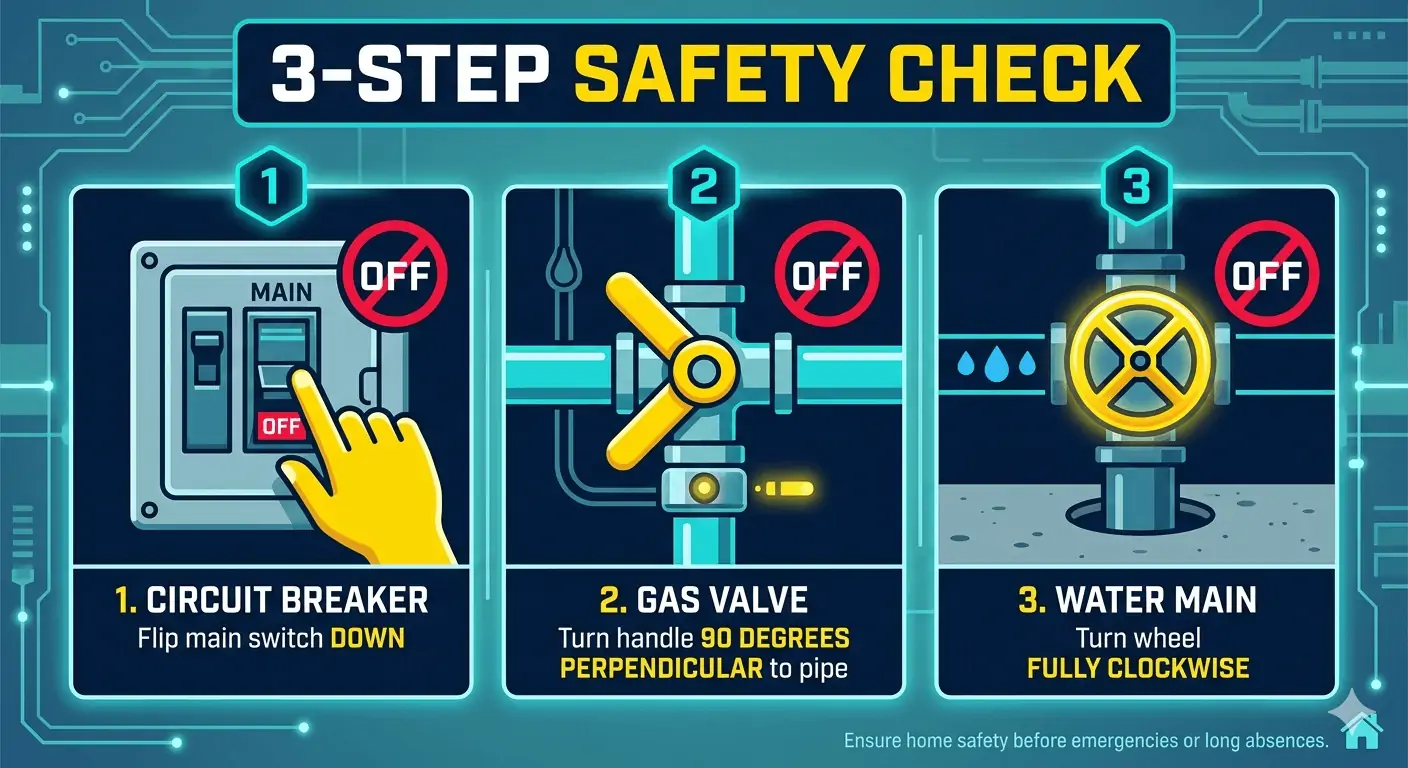
  1. Kill the Power: Find your main breaker box and shut off power to the basement. If the box is *in* the water, do not touch it—call an electrician. Never step into standing water if the electricity is still on.
  2. Shut Off the Gas: If you have a gas water heater or furnace submerged, turn off the main gas valve. Submerged pilots can go out, and gas can build up fast.
  3. Stop the Flow: If a pipe burst, find your main water shut-off valve and turn it clockwise until it stops.

The Emergency Call List: The Professional Sequence

The order you call people determines how fast you get dry and whether your insurance company actually cuts you a check.

1. Licensed Electrician (The "All-Clear")

You need a pro to verify the structure is safe. Standing water can hold "stray voltage" from outlets you can't even see. Don't start the cleanup until an electrician gives you the green light.

2. Emergency Plumber (The "Fixer")

If the water is coming from a burst pipe, a failed sump pump, or a sewage backup, you need us.

Pro Tip: If the flood is from a massive storm or rising groundwater outside, a plumber cannot do much until the water level outside drops. We cannot pump water out if it is just going to flow right back in.

3. Restoration Specialist (The "Cleaner")

These professionals handle the extraction and sanitization. Look for "IICRC Certified" (Institute of Inspection, Cleaning and Restoration Certification) on their website. In our experience, if you don't get professional drying equipment in there within 24 to 48 hours, you are basically inviting mold to move in [1].

When to Call 911 or the Gas Company

Some things are bigger than a plumbing fix. Evacuate and call 911 if:

  • You smell "rotten eggs": That is a gas leak. Don't touch a light switch—just get out.
  • The walls are moving: If you see new cracks in the foundation or walls bowing inward from the water pressure, the house is structurally unstable.
  • CO Alarms are sounding: Carbon monoxide can build up if your vents are blocked by water.

Filing an Insurance Claim: How to Get Paid

Don't touch a mop until you have taken at least 20 photos.

  • Homeowners Insurance: Usually covers "sudden" events like a pipe snapping.
  • Flood Insurance: This is usually a separate policy for rising groundwater (common in Miami after a hurricane).
  • The "Money" Shot: Take a photo of the water line against the wall with a ruler. This proves exactly how deep the water got.

Professional Restoration vs. DIY Cleanup

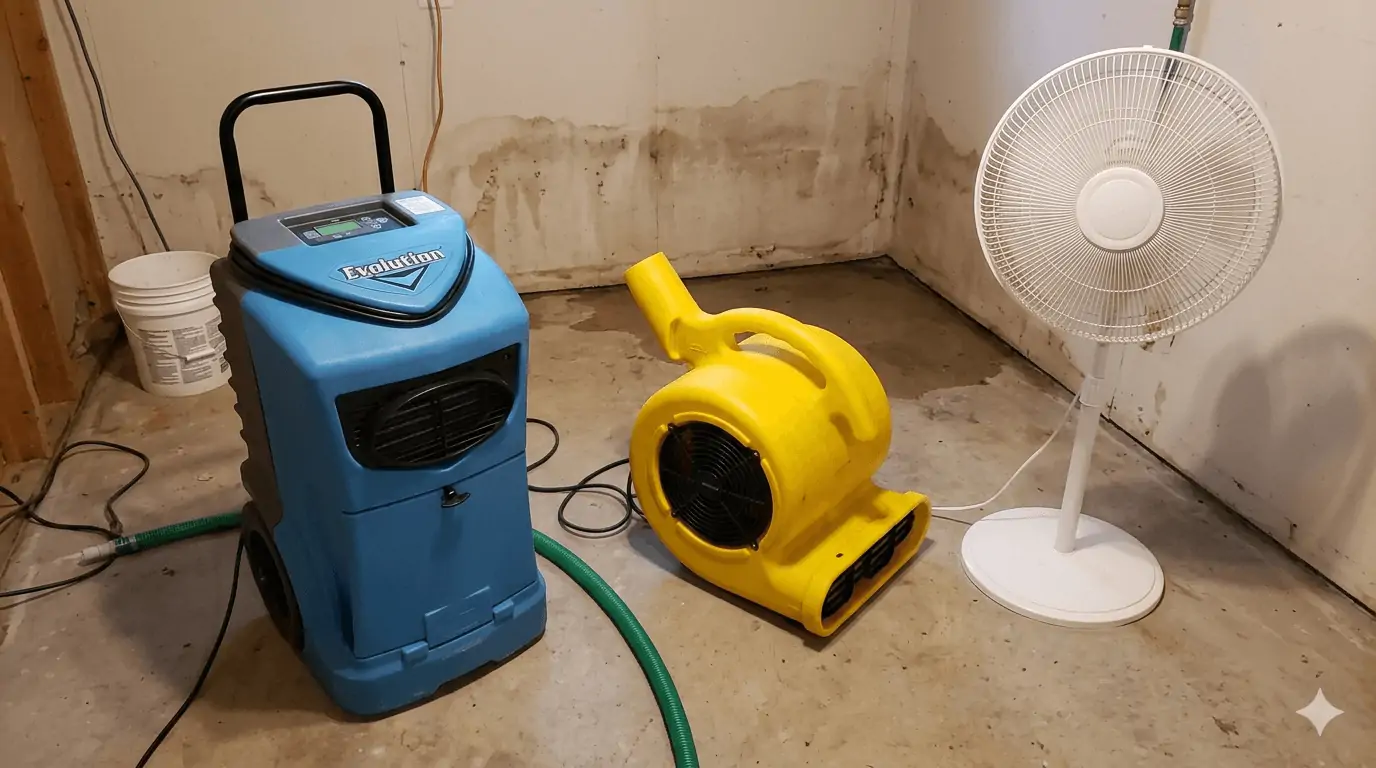
We have seen plenty of homeowners try to dry a basement with a few box fans. It almost never works. Water gets into the "sill plate" (the horizontal wood at the bottom of your wall framing) and stays there.

The Comparison DIY Cleanup Professional Restoration
Water Type Only clean tap water (Category 1) Anything, especially sewage (Category 3)
Tools Shop-vac and fans Industrial LGR (Low Grain Refrigerant) dehumidifiers [8]
Mold Risk High (moisture stays in walls) Low (they use thermal cameras to find hidden pockets)
Cost Factor Cheaper upfront Saves the house from $10k+ mold remediation

A Note on "Black Water": If your basement is flooded with sewage or storm water (Category 3), do not touch it. It is full of bacteria and chemicals. This is a job for pros with hazmat gear. Professional drying services might seem expensive, but renting proper equipment can cost $50+ a day, and doing it wrong leads to massive mold remediation costs later [9, 11].
The "Anti-Scam" Checklist: Don't Get Ripped Off

When a neighborhood floods, "storm chasers" appear out of nowhere. Before you sign anything, ask:
  1. "Are you IICRC certified?" (If they don't know what that is, hang up).
  2. "Do you use Xactimate?" This is the industry-standard software for pricing. If they use it, your insurance company is much more likely to approve the estimate.
  3. "Where is your local office?" If they are from out of state, you will never find them if the work is shoddy.

Who is Responsible?

  • Private Homes: It is generally on the owner, unless a city water main broke in the street. In complex cases, you might need a legal consult to prove the city was at fault [7].
  • Apartments: Generally, the landlord handles the structure and plumbing [4]. However, if the tenant caused the flood (e.g., leaving a tub running), they are likely responsible for the damage to the unit and the neighbors below [5].
  • The Bottom Line: Landlords handle the "bones" of the building; tenants handle their own belongings and any damage they personally caused [5].

Your 24-Hour Action Plan

  1. Hour 1: Power off. Gas off. Find the leak.
  2. Hour 2: Call the plumber and the drying pros.
  3. Hour 3: Call insurance and take your photos.
  4. Hour 4-12: Get the standing water out.
  5. Hour 12-48: Get industrial dehumidifiers running at full blast.

We know it feels like the walls are closing in when you see water where it shouldn't be. But remember: houses are resilient, and as long as you act within that first 24-hour window, you can save your home. You have the sequence, you have the safety steps, and you know who to call. Take a deep breath, grab your phone, and let's get that basement dry. You are not in this alone—we have seen it all before, and we know exactly how to get you through to the other side.

References

[1] IICRC Standards for Professional Water Damage Restoration.

[2] Average costs for sewage and sump pump installation (Industry Standard).

[3] Material costs for residential drainage systems.

[4] Standard Landlord-Tenant Act: Maintenance of habitable premises.

[5] Liability analysis: Negligence and property damage in multi-unit housing.

[7] Civil law consultation on municipal liability for utility failure.

[8] Professional drying pricing: LGR vs. Standard dehumidification [Source].

[9] Equipment rental rates and remediation cost analysis.

[11] Long-term mold remediation ROI study.

FAQ

Usually, yes. It is often a failed sump pump (a pump that removes water from a pit under the floor) or a lack of proper drainage. Installing a new sump pump system typically runs between $600 and $3,000, plus labor at $45-$200 an hour [2]. If you need a French drain (a trench filled with gravel and a pipe), expect to add $60 to $800 in materials [3].
You have a 24 to 48-hour window [1]. After that, mold spores start colonizing your drywall and carpet. Once it is in the walls, the price of the job triples.

Our author

Jessica Garrett
Written by Jessica Garrett
Verified Verified by Carlos Rivera
?
The articles on our website are written by copywriters, but before publication, each article is reviewed by one of our experts.

Author of articles on our website. Experienced copywriter in the DIY, home, and interior design industries