24/7 Emergency Service | Licensed & Insured | Upfront Pricing.
 Call Now: (786) 638-7923
24/7 Emergency Service | Licensed & Insured | Upfront Pricing.
Call Now: (786) 638-7923


In our 15 years of plumbing across Miami, the team has walked into countless garages where the water heater was cranked up to "scalding" for no clear reason. Most people assume higher is better, but setting the temperature is actually a delicate balancing act between the electric bill, skin safety, and keeping the water supply clean.
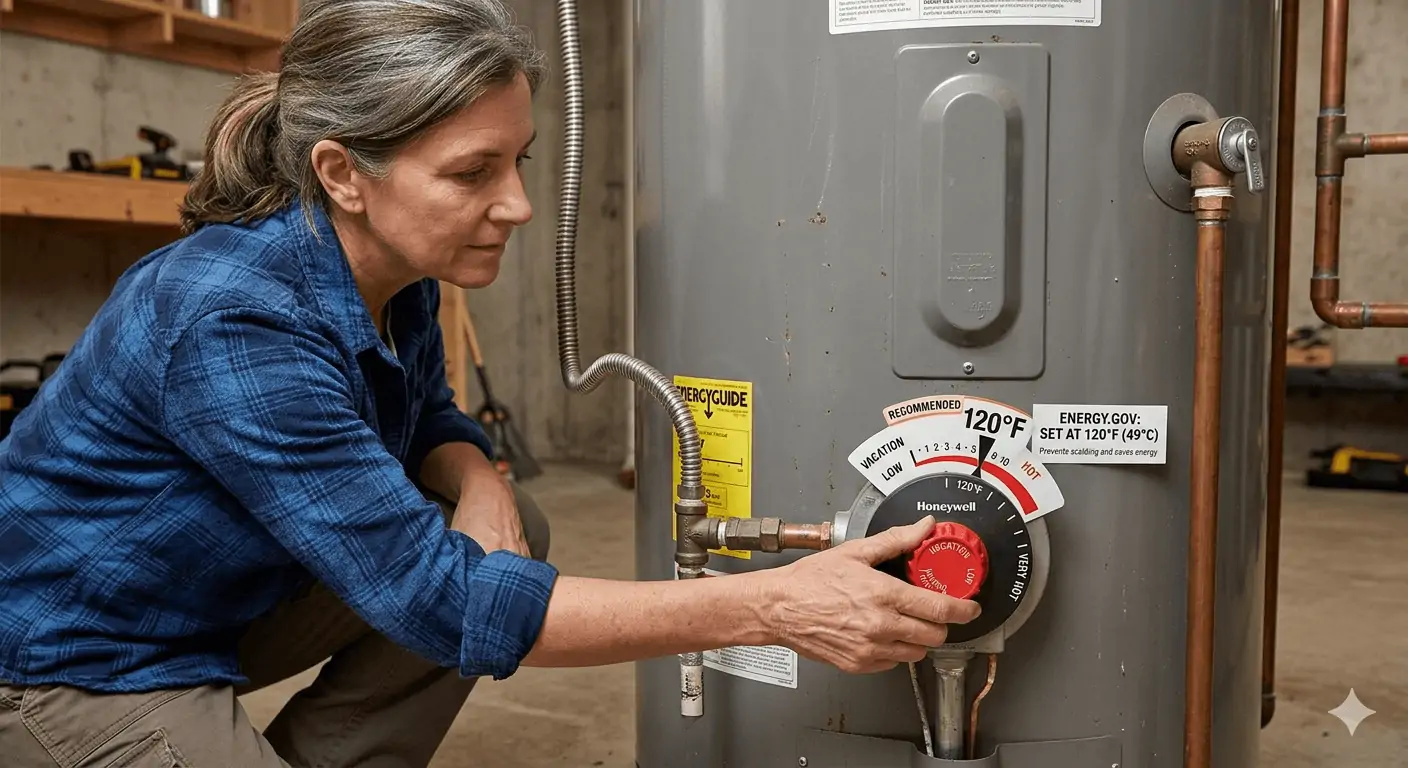
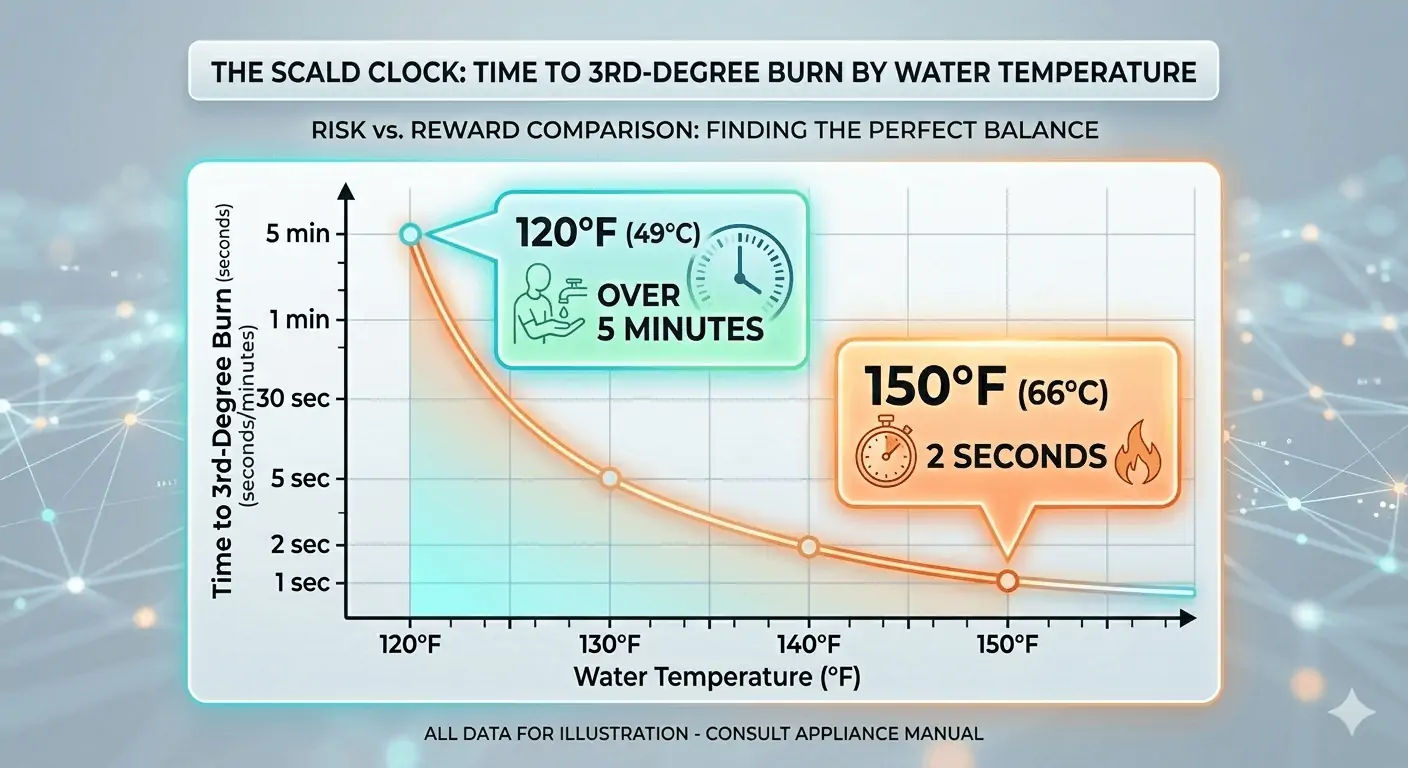
For about 90% of the homes we service, 120°F (49°C) is the "sweet spot." This isn't just a professional opinion—it's the standard recommended by the Department of Energy (DOE) and the EPA [1].
At 120°F, the water is plenty hot for a steaming shower, but it won't cause a third-degree burn in seconds. More importantly for the household budget, it stops (standby loss)—which is just a plumber's term for heat escaping through the tank walls while the unit sits idle. Dialing it down to 120°F can save up to $400 a year in total energy costs, with about $36 to $61 of that coming purely from stopping that wasted standby heat [2].
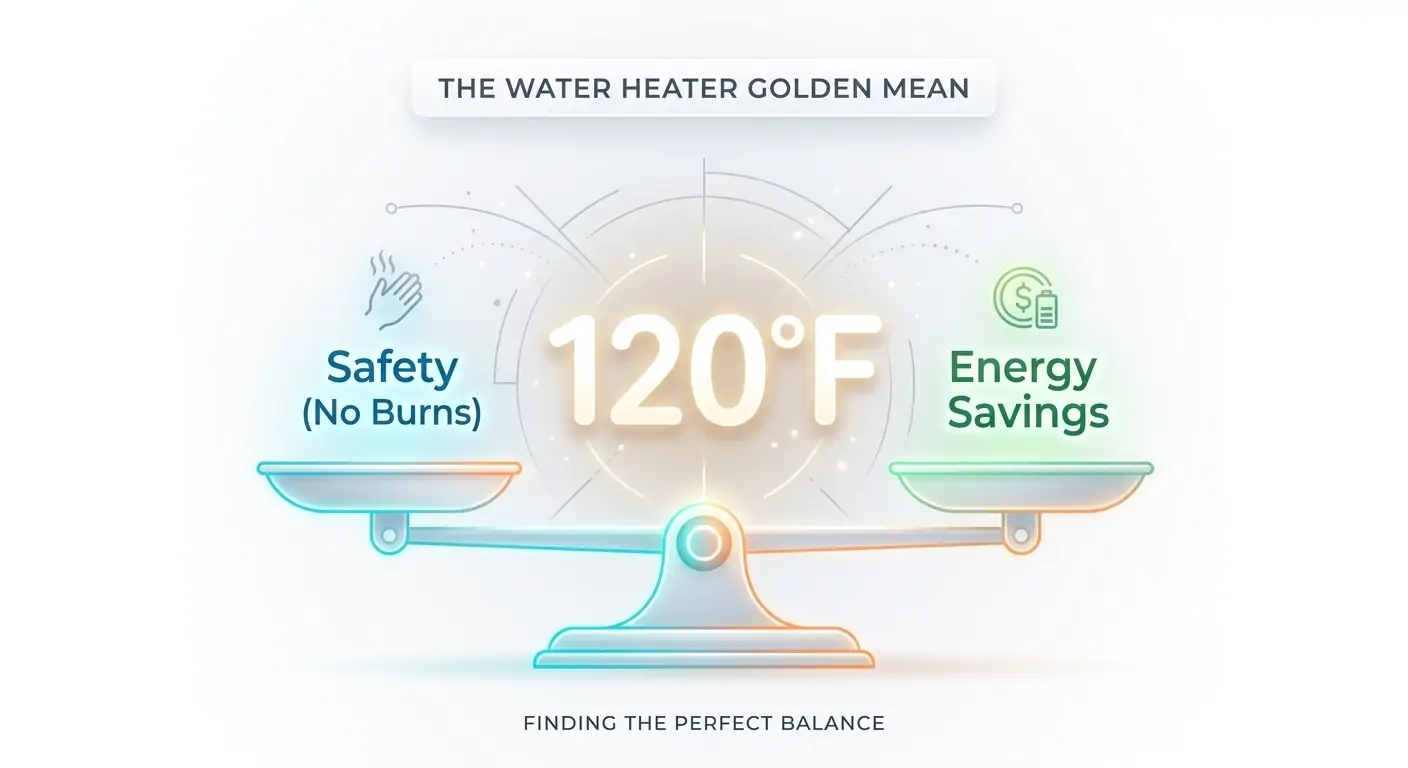
A question we hear on almost every job: "Won't bacteria grow if the tank stays at 120°F?" It's a valid concern. High heat is a natural killer—it wipes out 90% of bacteria at 122°F (50°C) within two hours and kills them instantly at 158°F (70°C) [3].
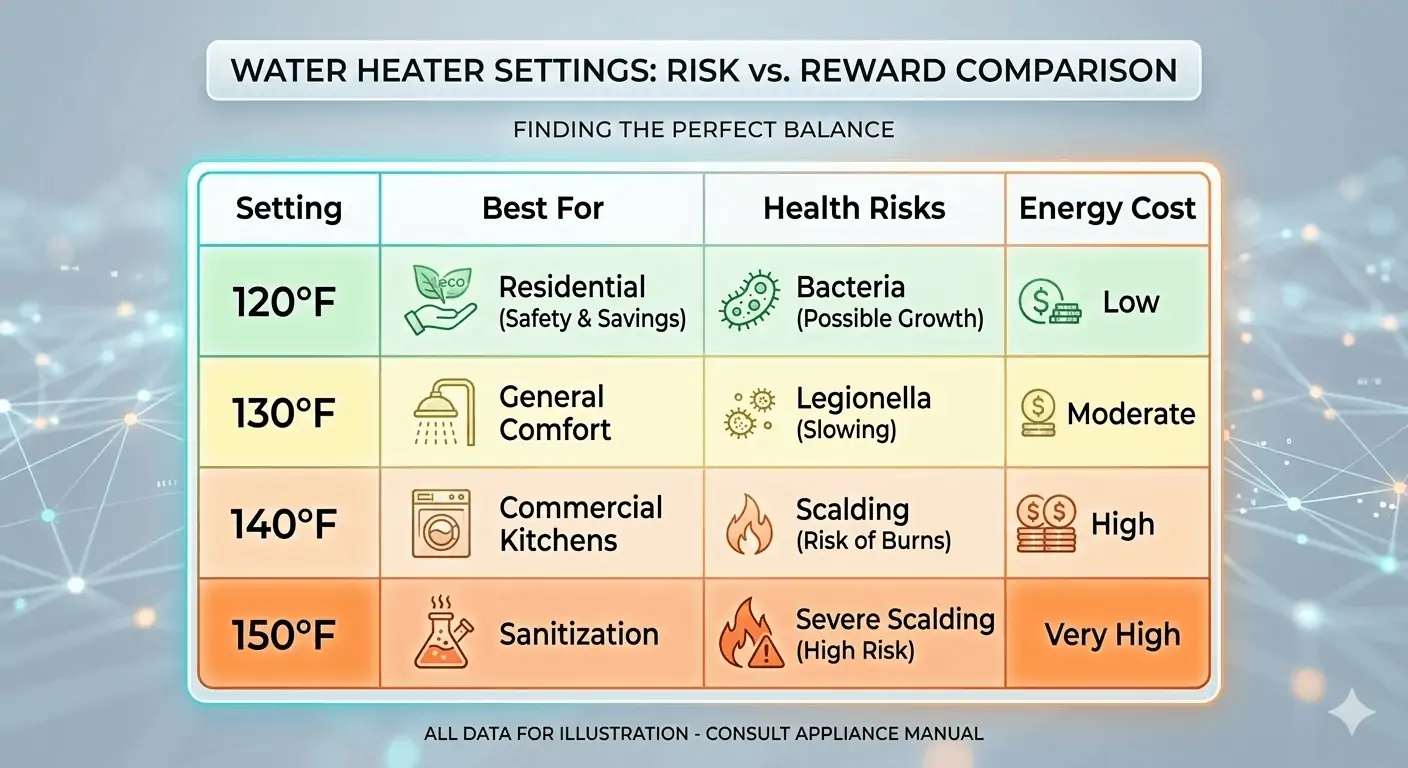
There are three specific scenarios where our team recommends keeping the setting at 140°F:
1. Old Dishwashers: If a dishwasher was made before 2010, it might lack a "booster heater" to sanitize dishes. Note: if the temperature goes over 140°F, it may actually neutralize the cleaning enzymes in modern detergents, leaving plates dirty [4].
2. Health Concerns: If someone in the home has a weakened immune system, the CDC suggests higher temperatures to ensure pathogens are totally eliminated [5].
3. Large Families: If five people shower in one hour, storing water at 140°F provides more "effective" hot water because more cold water is mixed in at the tap.
The primary risk of 120°F is *Legionella*. These bacteria thrive in stagnant water between 68-113°F (20-45°C) [3], [5].
The Pro Solution: For those worried about bacteria but living with small children, we recommend installing a (mixing valve). This allows the tank to stay at a bacteria-killing 140°F, but it mixes in cold water right at the exit so the water hitting the skin is a safe 120°F.
Cranking the heat above 130°F essentially fast-tracks the death of the heater. Minerals settle on the bottom (in gas units) or the heating elements (in electric ones). This scale acts like a thermal blanket, forcing the unit to work twice as hard. Without maintenance, homeowners face an average repair bill of $606 by 2026 [7].
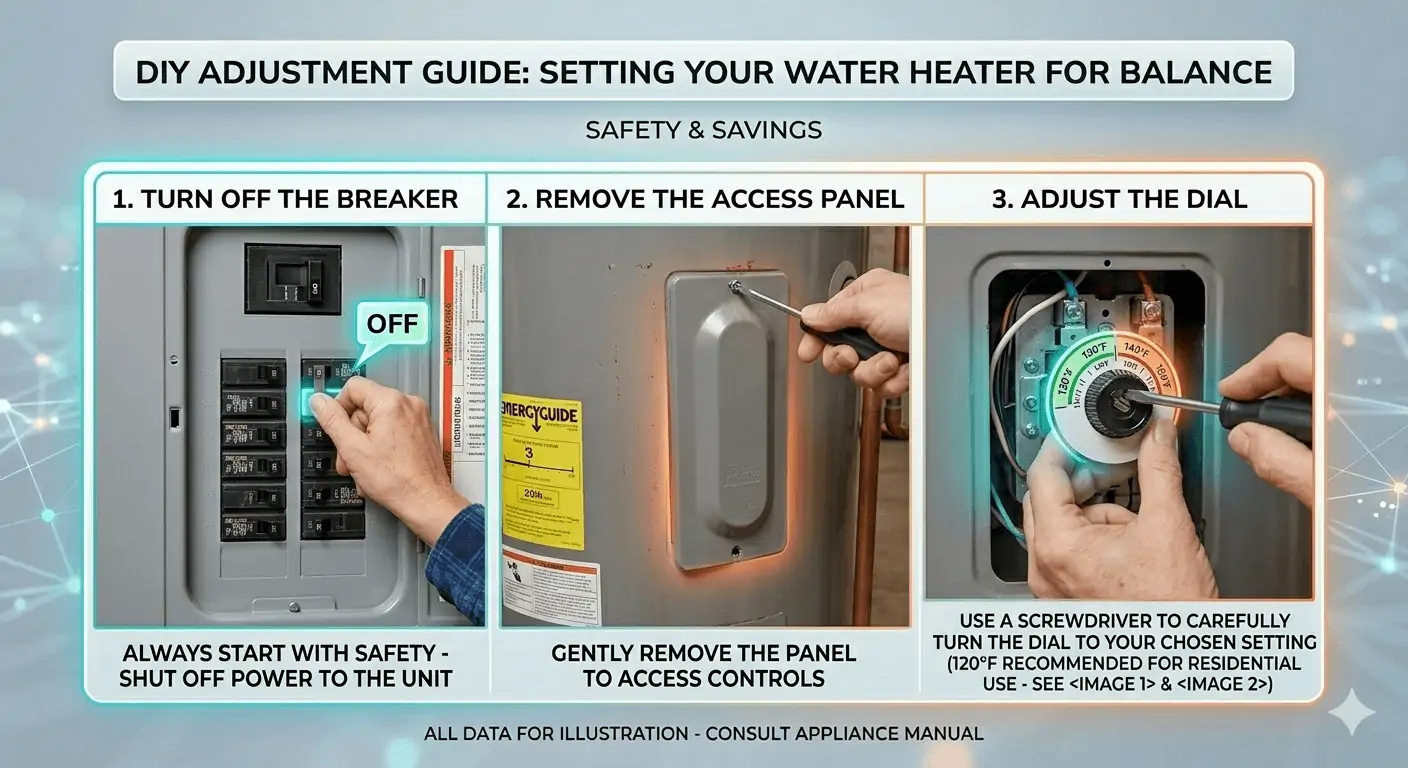
Most homeowners can handle this adjustment safely without a service call.
1. Kill the Power: For electric units, flip the breaker. For gas, turn the dial to "Pilot." Never skip this step.
2. Open the Panel: Use a screwdriver to remove the metal access doors on the side of the tank.
3. Adjust the Thermostat: Use a flathead screwdriver to nudge the dial. If it's an electric unit, there are usually two thermostats (upper and lower); set them both to the same temperature.
4. Close it Up: Replace the insulation and panels before restoring power.
Most manufacturers use letters instead of numbers. Here is the translation:
Pro Tip: Don't trust the dial implicitly. Run hot water at the kitchen sink for a minute, fill a glass, and check it with a digital meat thermometer to find the *real* temperature.
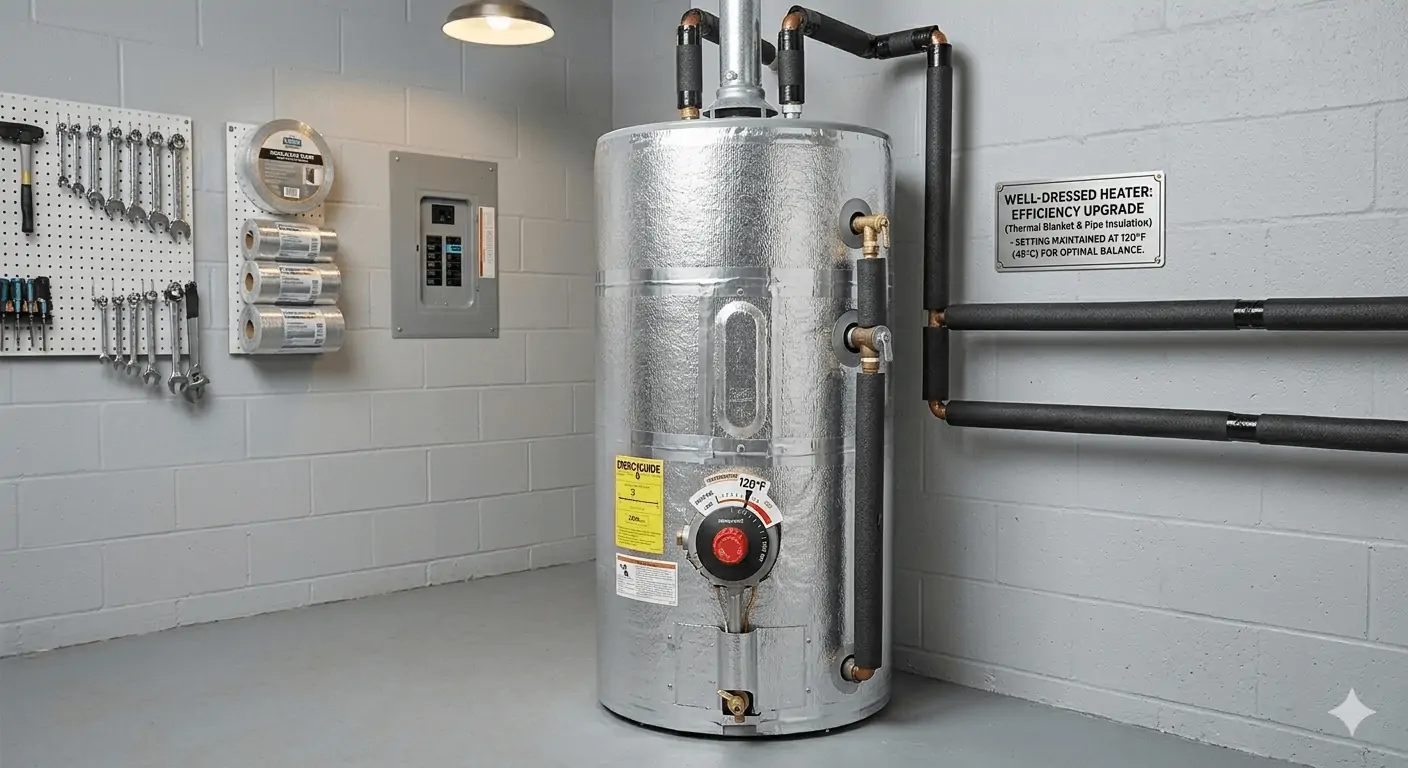
To lower the bill without sacrificing heat, we recommend these steps:
Sometimes the dial isn't the problem—the hardware is. Call a professional immediately if these signs appear:
[1] U.S. Department of Energy (EnergySaver.gov) — https://www.energy.gov/energysaver/services
[2] Peoples Gas Delivery (Savings Tips & Standby Losses) — https://www.peoplesgasdelivery.com/savings/tips-water
[3] LegionellaControl.com (Temperature Influences) — https://www.legionellacontrol.com/guidance/water-temperature-legionella/
[4] Finish Dishwashing (Ultimate Guide - Enzyme Protection) — https://www.finishdishwashing.com/ultimate-guide/
[5] CDC (Control Legionella Toolkit) — https://www.cdc.gov/legionella/wmp/control-toolkit/index.html
[6] French Domestic Hot Water Regulations (The Thermostatic)
[7] Angi (Water Heater Repair Costs 2026) — https://www.angi.com/articles/water-heater-repair-cost.htm
[8] Dr. Zaydon (Scald Burns Analysis & Vacation Mode) — https://www.drzaydon.com/scald-burns-analysis
[9] Sustainability Directory & Dermatology Standards

 Verified by Jake Nathan