24/7 Emergency Service | Licensed & Insured | Upfront Pricing.
 Call Now: (305) 507-45-57
24/7 Emergency Service | Licensed & Insured | Upfront Pricing.
Call Now: (305) 507-45-57


If you’ve ever looked under your sink and wondered why the pipe takes a sudden, U-shaped dip before heading into the wall, you’re looking at the most important safety feature in your home’s plumbing: the P-trap.
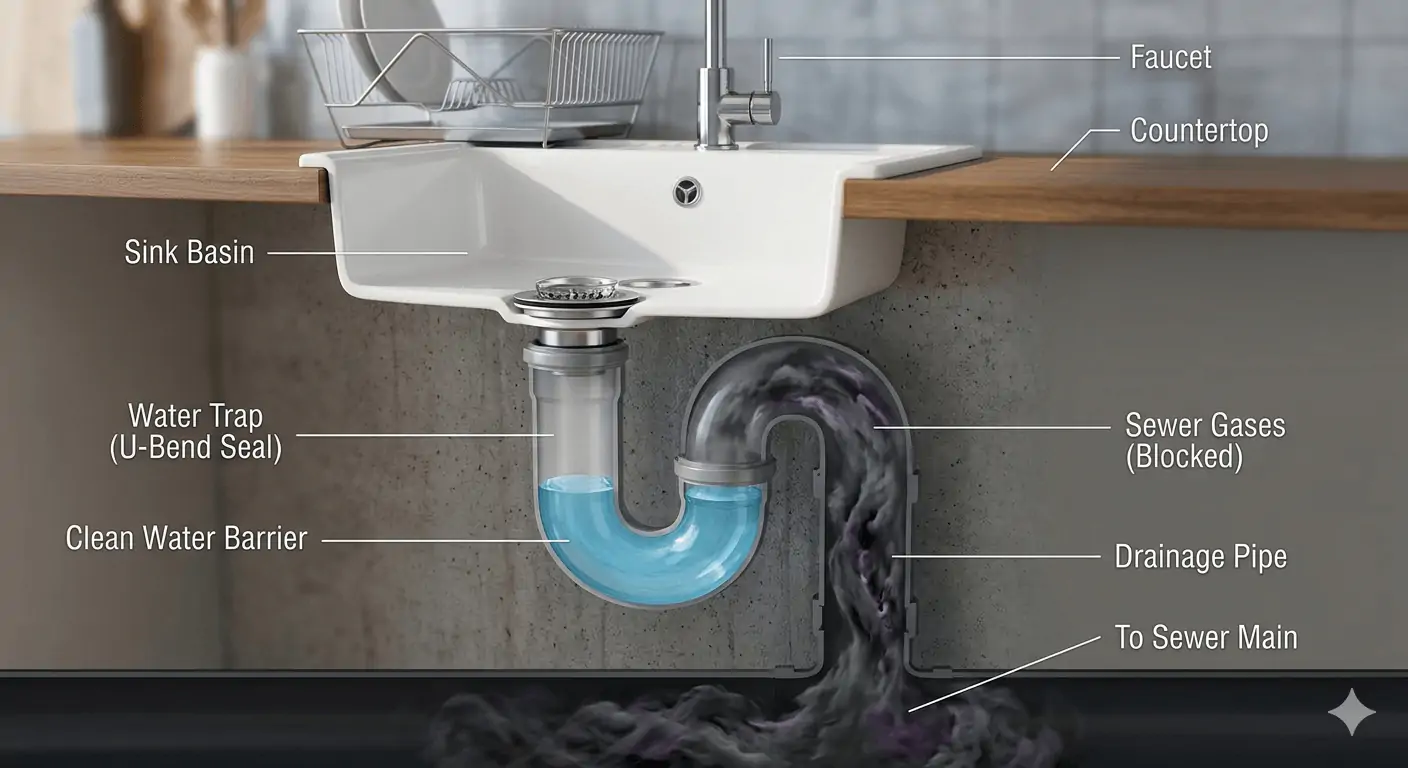
With over 15 years of experience servicing Miami homes, our team has seen exactly what happens when these simple devices fail. It’s not just about a slow drain; a P-trap is a liquid seal that keeps hazardous sewer gases—like methane and carbon monoxide—from drifting out of your pipes and into your living room.
Before grabbing a pipe wrench, it is essential to identify the boundary between a 15-minute fix and a weekend-ruining disaster. A small unseen drip can turn a cabinet floor into swollen, wet cardboard in a week, leading to mold and a $2,000 restoration bill.
| Issue | Severity | Action Plan |
|---|---|---|
| Slow drain or minor clog | Low | DIY: Clean the J-bend (5-10 minutes). |
| Dripping at the joint | Low | DIY: Tighten the nut or replace the washer. |
| Foul "rotten egg" smell | Low | DIY: Run the water; the trap may be dry. |
| Cracked pipe inside the wall | High | Call a Pro: Requires cutting into the drywall. |
| Water backing up everywhere | High | Call a Pro: This is a main line blockage, not a trap issue. |
STOP DIY and call a professional if: You find standing water behind the cabinet wall, notice black mold colonies, or if the foul smell persists even after running the water for several minutes.
The P-trap doesn't have any moving parts. It relies on basic physics. Every time the faucet runs, the "old" water in the curve is pushed out and replaced by "new" water. When the tap is turned off, gravity keeps a specific amount of water in that U-bend.
This creates an airtight seal. Without it, a house is essentially connected to the city's entire sewer system via an open straw.
The Anatomy of Your Trap:
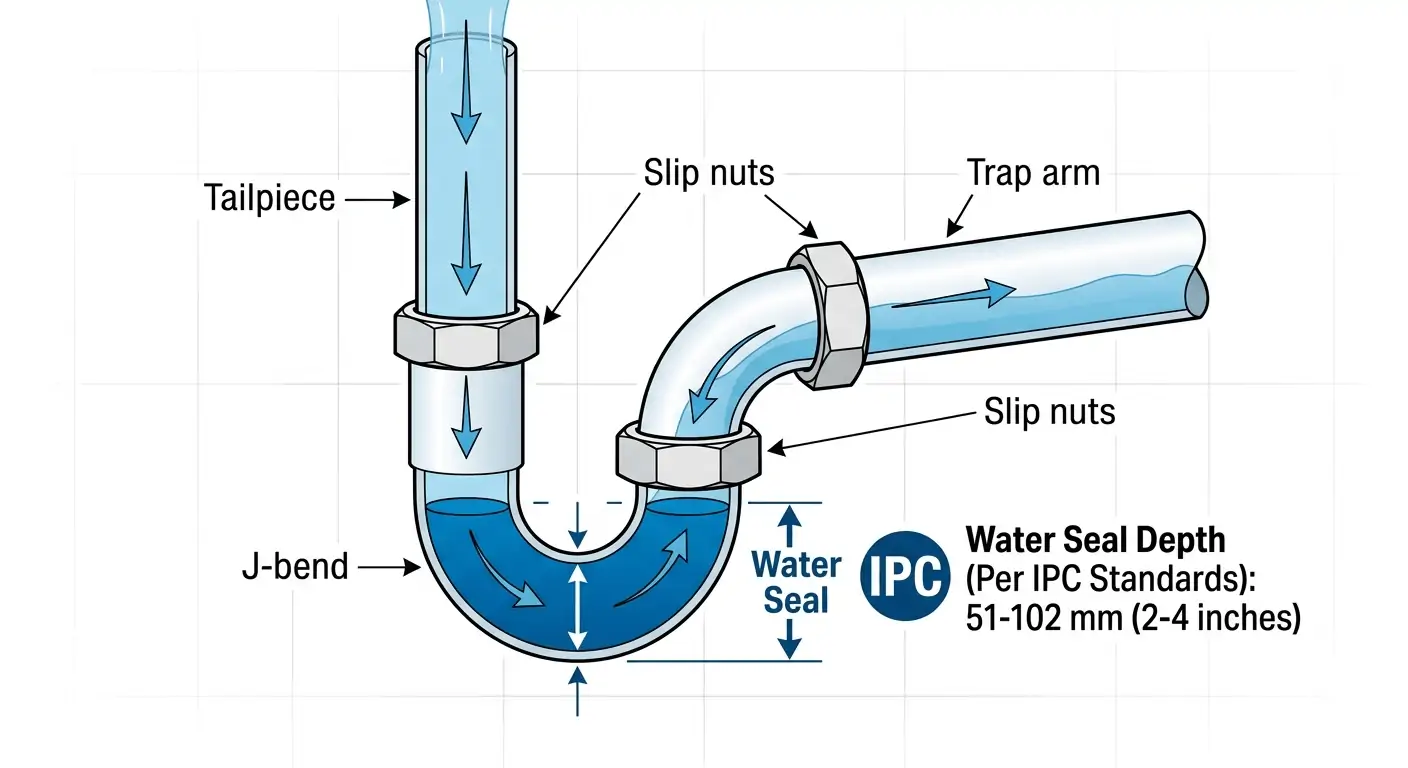
In older Miami homes, one might see "S-traps"—pipes that go straight down into the floor. The problem: S-traps are notorious for "self-siphoning." The weight of the water flowing down can create a vacuum that sucks the trap dry, leaving the home unprotected.
Because of this, S-traps are prohibited under the International Residential Code (IRC) and International Plumbing Code (IPC) [1]. During any remodeling, our team always recommends switching to a vented P-trap to meet modern safety standards.
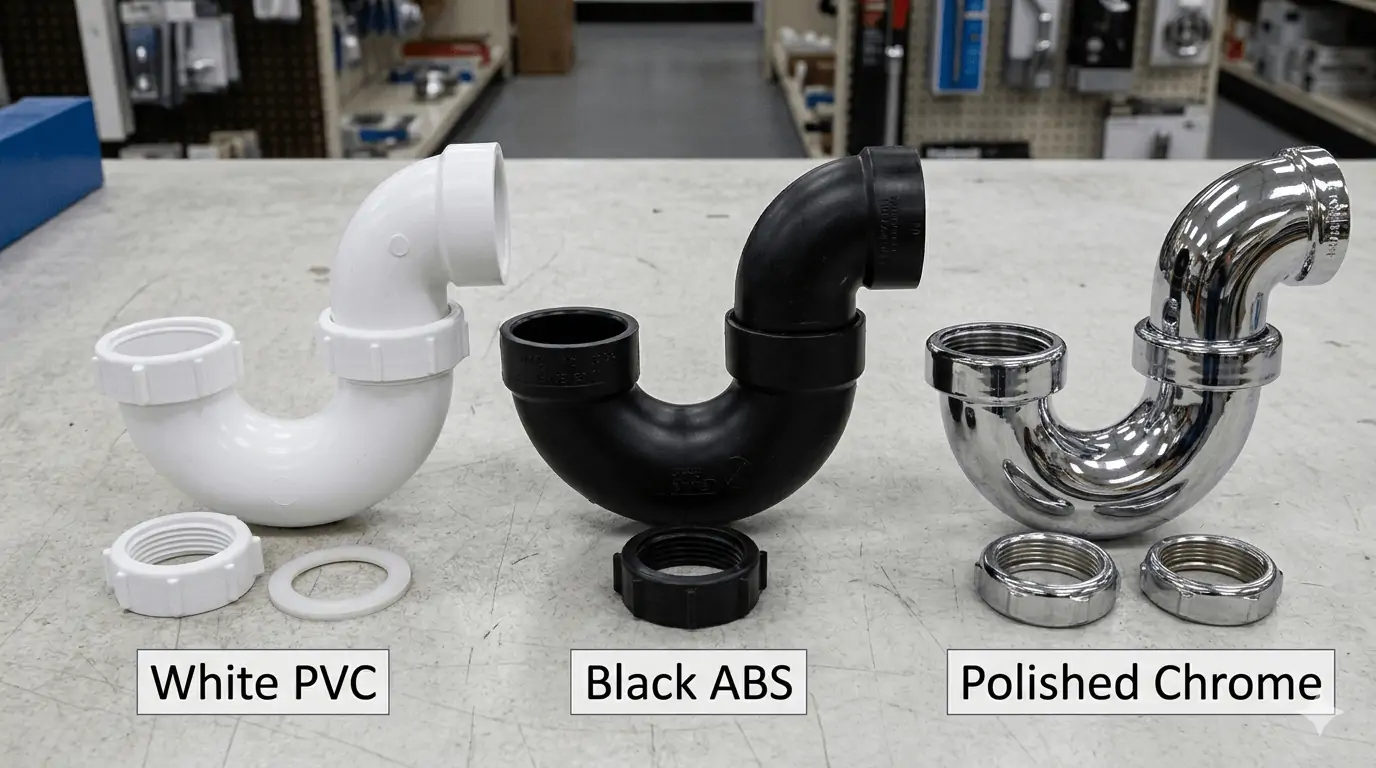
When standing in the plumbing aisle, the choices can be overwhelming. Here is how we break it down for our clients:
1. PVC (White): The gold standard for DIY. It's inexpensive, easy to cut, and resists corrosion.
2. ABS (Black): Similar to PVC but tougher. We see this frequently in newer Miami builds.
3. Chrome-plated Brass: Used primarily when plumbing is "exposed" (like under a pedestal sink). It looks professional but will eventually corrode from the inside.
4. The "Accordion" Pipe (Avoid This): You will see flexible, corrugated (ribbed) pipes that "bend to fit." Do not buy them. They act as a hair and grease magnet. They are illegal in many jurisdictions because the ridges trap bacteria and lead to chronic clogs [6].
Fixing a leak doesn't require a degree, but it does require a plan to protect the cabinetry.
1. The Protection Rule: Lay down a heavy towel and place a bucket under the trap. There is *always* water inside, and in a kitchen sink, it is often a cocktail of grease and debris.
2. Loosen the Slip Nuts: Turn them counter-clockwise. If they are plastic, use your hands. Using a wrench on plastic risks cracking the threads and causing a permanent slow drip.
3. The Inspection: If the goal is just cleaning, remove the J-bend, clear the clog, and rinse it. If the pipe is thin or cracked, replace the whole assembly.
4. Clean the Connections: Wipe down the tailpiece and the wall pipe. A single grain of grit on the washer will cause a leak.
5. Align and Tighten: Slide the new nuts and washers onto the pipes. Ensure the beveled (pointed) side of the washer faces the joint. Tighten them "hand-tight," then add a quarter-turn with pliers.
6. The 60-Second "Peace of Mind" Test: Fill the sink to the overflow hole, then pull the plug. This puts maximum pressure on the new joints. Run a dry paper towel over every connection. If it stays bone-dry, the job is a success.
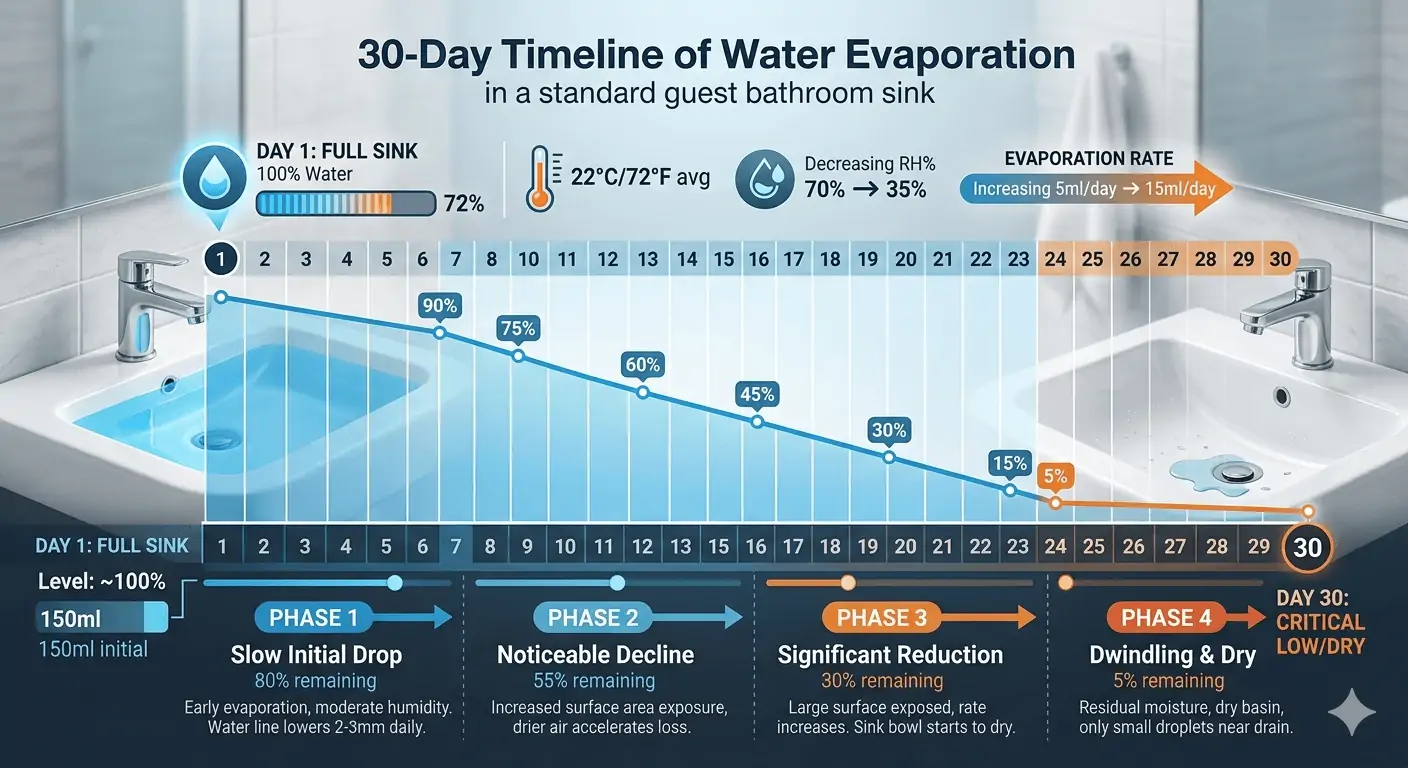
If the trap isn't leaking but a sewage smell persists, it is likely a Dry Trap.
In the South Florida heat, if a guest bathroom goes unused for a few weeks, the water seal can evaporate. At 75°F, a sink can lose about 2.2 inches of its water seal in a single month [4].
We often see homeowners reach for heavy acids (like Sulfuric Acid) the moment a drain slows. Exercise extreme caution. These chemicals create an "exothermic reaction" (a chemical process that releases intense heat).
They can get hot enough to warp plastic pipes and melt the rubber gaskets that keep your joints watertight [4]. If a cleaner is necessary, use ASSE 1044-certified products or use a mechanical snake [5].
Plumbing issues can feel like a ticking clock, especially when you're worried about your floors or the health of your family. But remember: most of what happens under your sink is governed by simple rules. By taking ten minutes to understand your P-trap, you've already done more to protect your home than most. You have the tools, you have the steps, and if the job ever gets bigger than the bucket—we are always here to help you finish it.
[1] International Residential Code (IRC) P3102.5 / IPC 1002.3 - S-Trap Prohibition.
[2] Standard Drain Diameters and Plumbing Codes.
[3] 24 CFR 3280.606 - Federal Manufactured Home Construction and Safety Standards.
[4] Deschamps Technologies: Evaporation Rates in P-Traps Whitepaper.
[5] ASSE International - Standards 1044, 1072, 1018 for Trap Protection.
[6] LarryInspects / ASPE Pipeline: Why Corrugated Pipes Fail.

 Verified by Carlos Rivera