24/7 Emergency Service | Licensed & Insured | Upfront Pricing.
 Call Now: (305) 507-45-57
24/7 Emergency Service | Licensed & Insured | Upfront Pricing.
Call Now: (305) 507-45-57


Walking up to a dry faucet is an instant stress-test. Whether the flow vanished entirely or dropped to a pathetic trickle, you’re likely wondering if this is a five-minute fix or a five-figure disaster. After 15 years of answering these emergency calls from Coral Gables to Brickell, I can tell you: most water failures follow a predictable pattern.
This guide is your tactical plan to find the bottleneck and get the water moving again before your laminate flooring—or your sanity—takes a hit.
Before you grab a pipe wrench, we need to determine if the problem is inside your walls or out in the street. A systematic check prevents you from paying a diagnostic fee for a problem that's actually the city's responsibility.
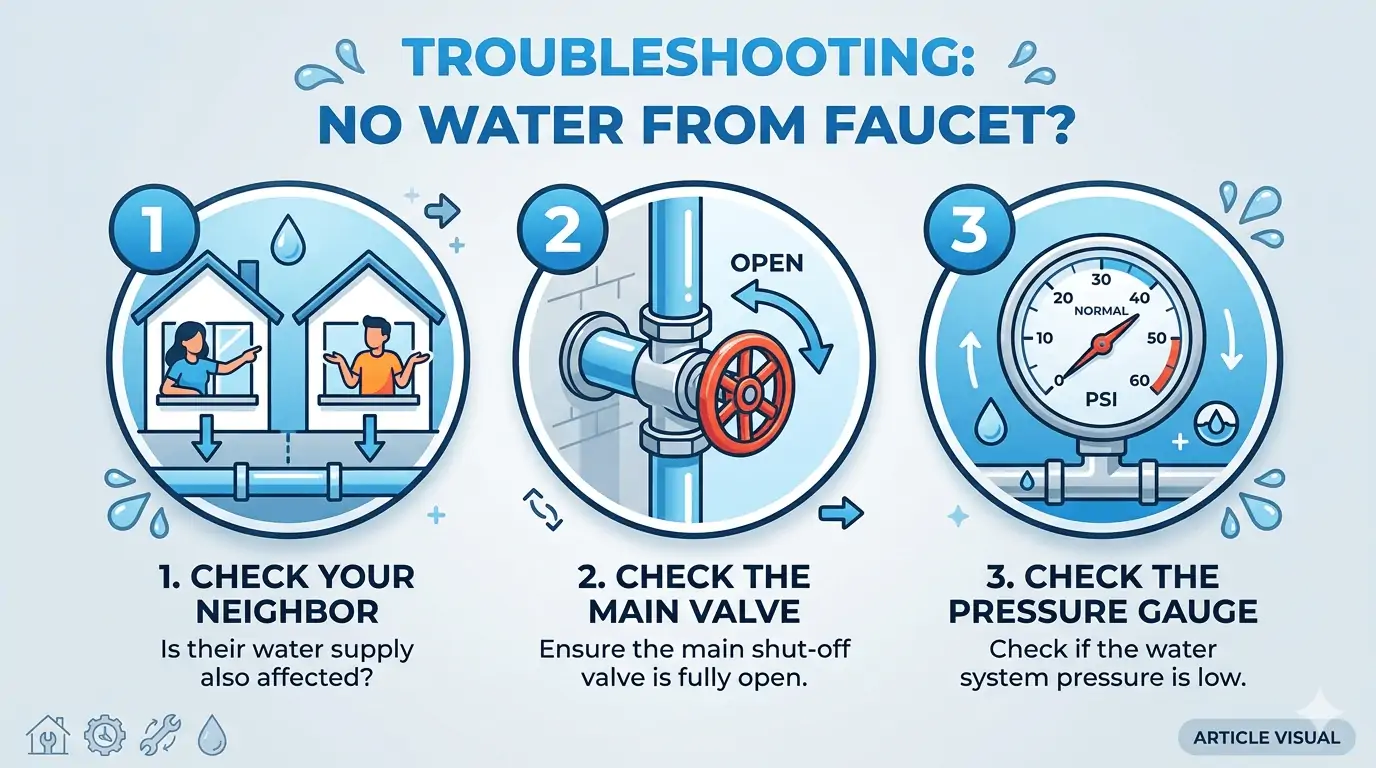
Your 3-step immediate response plan to rule out common "ghost" failures.
Follow these in order. We start with the easiest "oops" moments and move toward the mechanical components.
This is the "On/Off" switch for your entire home. You'll usually find it in the utility closet or tucked in a box near the street.
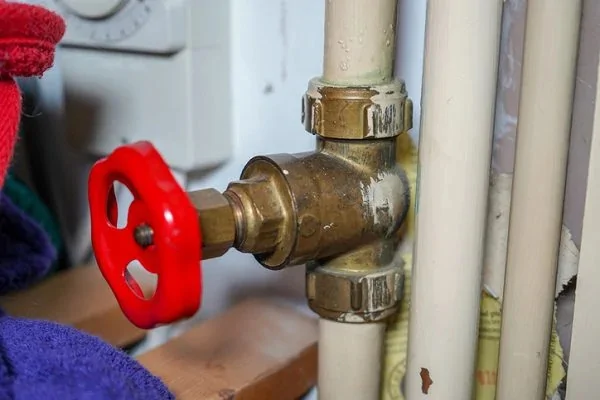
Make sure your main valve is fully open. Even a slightly turned valve can choke your home's water pressure.
If your valves are open but the taps are dry, the "blockage" is likely outside your property line. Check the official site for your local district (like Cal Water or your local municipal provider) [1]. They usually post alerts for main breaks. If you're in a pinch, call the local dispatch or 112 for emergencies [2].
Find your meter box. If the small dial (the leak indicator) is spinning like a top while all your taps are closed, you don't have a "no water" problem—you have a "massive leak" problem. If the dial is dead still and you have no water, the supply to the house has been interrupted.
If you have a whole-house filtration system, a severely clogged sediment filter can act like a wall. Bypass the system if you have a bypass valve. If the pressure is restored, it means it’s time to change the filter.
This bell-shaped brass regulator controls the force of water entering your home. Most homes should sit between 2.5-3.5 bar (roughly 36-50 PSI) [3]. If the internal diaphragm fails, it can flip shut, cutting off the flow entirely.
Even in warmer climates, a freak cold snap can hit uninsulated pipes in attics. Uninsulated pipes start to risk freezing at -7 °C (19.4 °F), but metal pipes can crack as high as -5 °C (23 °F) if there's a draft [7].
If cold water works but the hot side is dead, your water heater is the bottleneck. Check the cold-water inlet pipe on top of the heater to ensure the valve hasn't been accidentally closed.
If the city says everything is fine, use this table to see where you stand:
| Symptom | Likely Cause | Difficulty | Action |
|---|---|---|---|
| No water anywhere | Closed main valve / City break | Easy | Check valve; call utility |
| No water anywhere | Failed PRV (Pressure Regulator) | Medium | Tap the valve; call a pro |
| Only hot water missing | Water heater valve/Pilot | Easy | Check heater inlet |
| Water is a trickle | Clogged main filter | Easy | Replace filter cartridge [4] |
| Water is a trickle | Massive hidden leak | High | Shut off main; call pro |
If the pressure dropped everywhere at once, your Pressure Reducing Valve (PRV) is likely failing. These have a lifespan, and in places with hard water, they can seize up. You can sometimes adjust them with a wrench, but be careful: too much pressure can blow out your appliances.
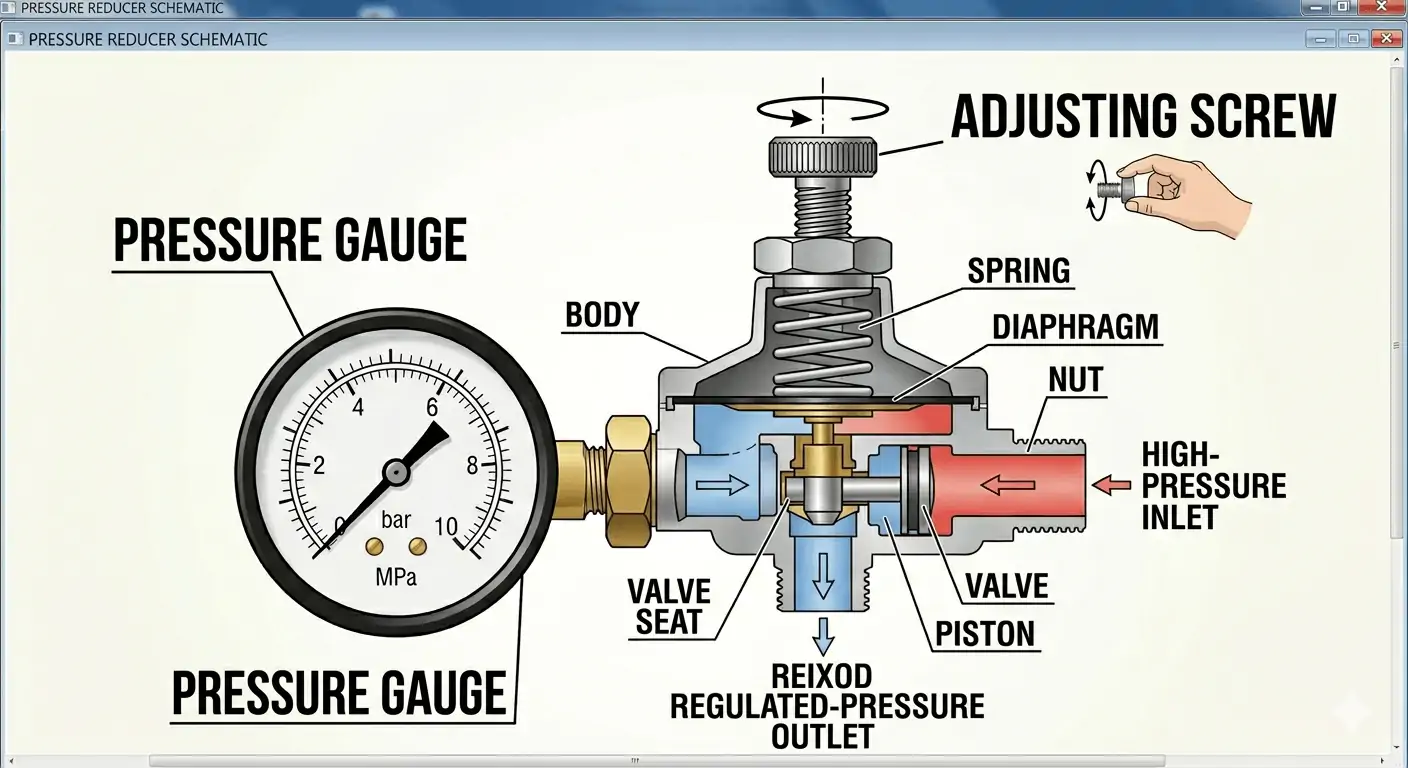
Adjusting the PRV: Turning the bolt clockwise usually increases pressure, but don't exceed 4 bar.
I'm all for homeowners being handy, but some things will cost you thousands if you mess them up. Call a pro if:
For larger residential or commercial setups, US Federal Law (40 CFR - 84.108) now mandates automatic leak detection for high-capacity systems [5]. Automated monitoring is the best way to prevent a disaster before it happens.
In my 15 years, I've seen people turn a $200 repair into a $6,000 restoration by following online "hacks":
1. The Blowtorch Blunder: Never use an open flame to thaw a frozen pipe. You'll either boil the water inside until the pipe explodes or set your insulation on fire. Use a hair dryer instead.
2. Chemical Overload: Dumping "industrial strength" acid down old steel pipes can eat right through the metal.
3. The "Hulk" Grip: If a valve is stuck, don't force it with a giant pipe wrench. If the stem snaps, you'll have an indoor fountain you can't turn off.
4. The PTFE Tape Trap: Always wrap thread tape (PTFE) clockwise (the same direction the fitting turns). If you wrap it counter-clockwise, the tape will just unspool and bunch up, causing a leak [9].
1. Install Smart Leak Detectors: For $50, you can get a sensor that pings your phone the second your water heater starts leaking.
2. Service Your Filters: Clogged sediment filters are the #1 cause of "mysterious" pressure drops. Swap your pre-filters every 6-12 months [4].
3. Insulate Before the Freeze: Even in Miami, an unexpected cold snap can ruin pipes. Keep them wrapped—it's cheap insurance [8].
| Service | Estimated Parts | Estimated Labor |
|---|---|---|
| Aerator Cleaning | ~$10 [6] | DIY |
| PRV Replacement | $200-$700 [6] | $150-$450 [6] |
| Main Line Leak Repair | Varies | Starts at $1,500+ [6] |
| Diagnostic Fee | N/A | $75-$200 [6] |
I know how it feels when the house goes silent and the taps go dry—it feels like the foundation of your home is failing. But remember: 90% of the time, the solution is sitting right in front of you, whether it's a municipal repair or a valve that just needs a nudge. Take it one step at a time. If you've gone through this list and the water still isn't flowing, you've done the hard work of ruling out the "ghosts." You're not guessing anymore—you're ready to call a pro with the right information. You've got this, and we're here if the wrench gets too heavy.
[1] Utility Lookup Tools (CA, TX, NJ, OH) — https://www.calwater.com/customercare/find-my-district/
[2] Emergency Contact Protocols (RF/Global) — https://sochi.ru/zhizn-goroda/grazhdanskaya-oborona/nomera-telefonov-ekstrennykh-sluzhb/
[3] Standard Residential Water Pressure (Bar/PSI) — https://www.stout.ru/articles/optimalnoe-davlenie-vody-v-chastnom-dome/
[4] Filter Maintenance Intervals (Culligan/Aquasana) — https://www.culligan.com/blog/when-to-replace-filters-on-drinking-water-filtration-systems
[5] Leak Detector Legal Requirements (40 CFR - 84.108) — https://www.law.cornell.edu/cfr/text/40/84.108
[6] Component Replacement & Repair Costs — https://mysantehnic-spb.ru/zamena-reduktora-davleniya/
[7] Critical Freezing Temperatures for Pipes — [Field Data]
[8] Safety Margin Temperatures (+10 °C) — [Field Data]
[9] Professional Errors (PTFE Direction/Overtightening) — [Field Data]

 Verified by Carlos Rivera