24/7 Emergency Service | Licensed & Insured | Upfront Pricing.
 Call Now: (305) 507-45-57
24/7 Emergency Service | Licensed & Insured | Upfront Pricing.
Call Now: (305) 507-45-57


Our team has spent over 15 years navigating the tight crawlspaces under Miami homes and cutting through stubborn South Florida limestone. We know the exact look on a homeowner's face when they realize their $20,000 landscaping or custom driveway might be sacrificed to reach a broken sewer pipe.
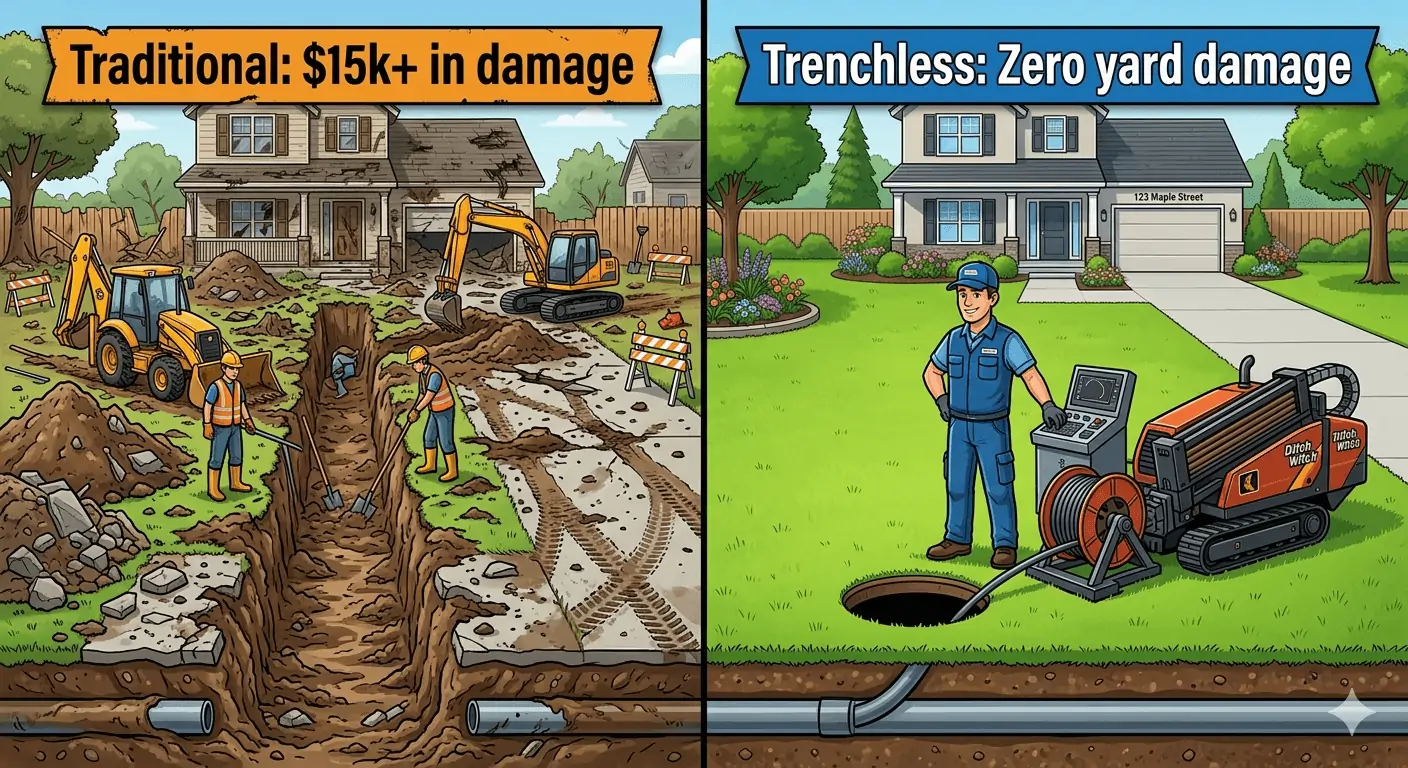
In 2026, digging a massive trench through your property is rarely the smartest move. Trenchless sewer repair—often called "no-dig" technology—allows us to restore your lines from the inside out without turning your front lawn into a construction site.
In our experience, pipes don't simply "quit" overnight; they provide warnings. If you notice these symptoms, the clock is ticking:
1. The "Slow Flow": When every drain in the house feels sluggish, the issue isn't a single sink—it's the main line.
2. The Swampy Spot: If one patch of grass stays suspiciously lush while the rest of the yard is dry, a leak is likely feeding the roots.
3. The Smell: Sewer gas belongs in the pipes, not your bathroom or patio.
4. The Gurgle: If the toilet bubbles when the shower runs, air is trapped by a blockage or a structural break.
| Symptom | What it means | Urgency Level |
|---|---|---|
| Single slow drain | Local clog | Within 48 hours |
| Multiple slow drains + smell | Main line blockage | Within 24 hours |
| Sewage backing up in tub/shower | Total system failure | Immediate / Emergency |
| Foundation cracks + wet spots | Major underground leak | Immediate / Emergency |
The Golden Rule: Never authorize a shovel to hit the ground without a Sewer Camera Inspection. We run a high-definition fiber-optic camera through the line to see the reality of the situation. Is it a simple clog, or has the pipe collapsed? You need the facts before spending a dime.
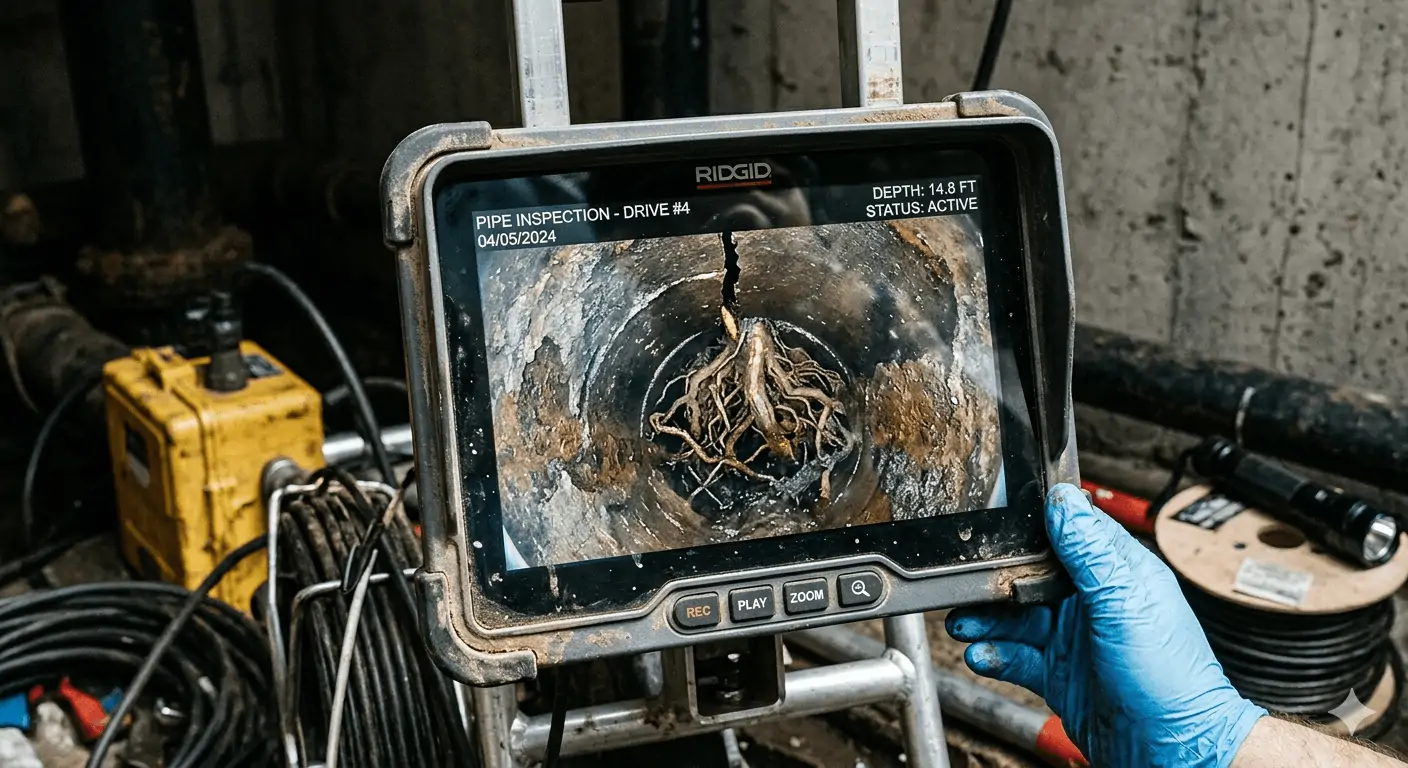
Trenchless repair is essentially "keyhole surgery" for your home. Instead of bringing in a backhoe, we use small access points to reach the sewer lateral (the pipe connecting your house to the city main).
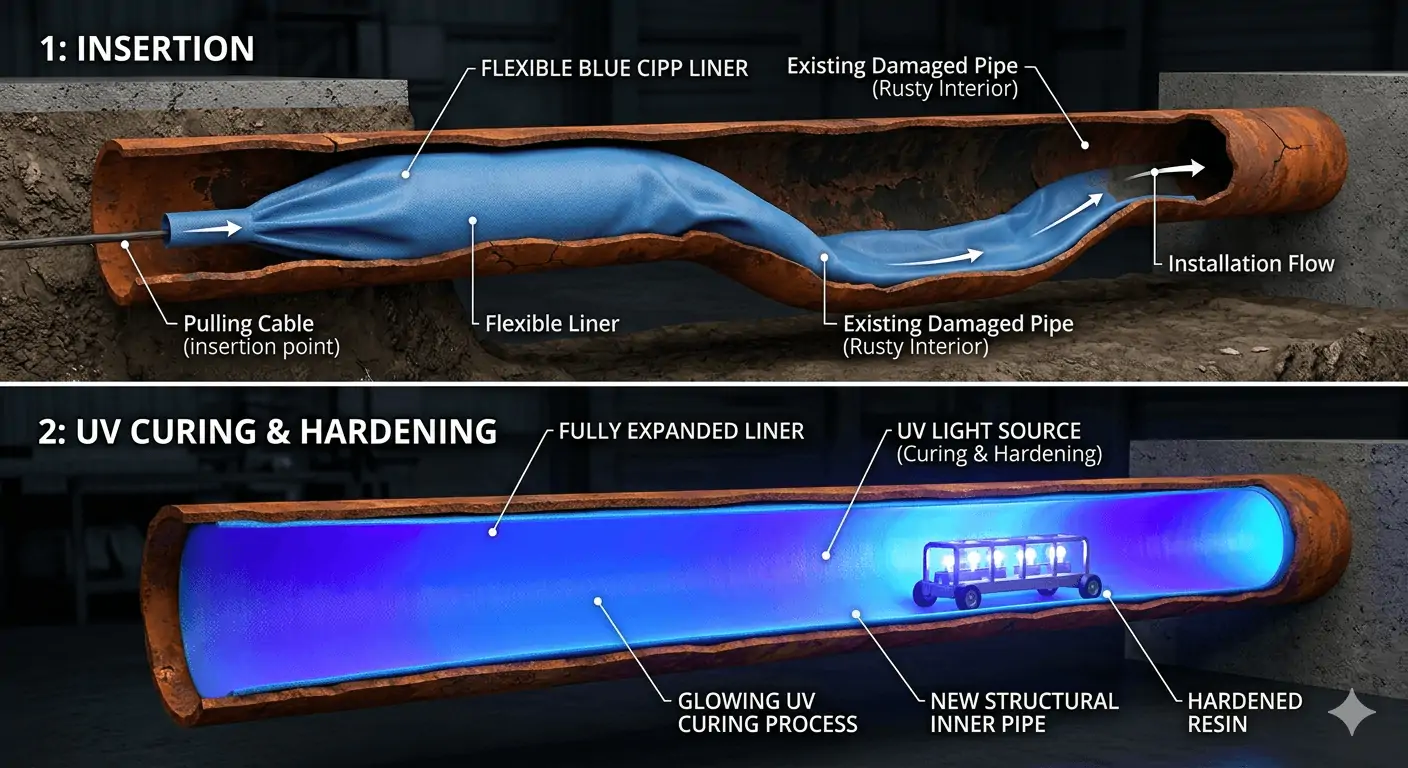
This is the gold standard for residential repair. We pull a flexible, resin-soaked liner into the old pipe, inflate it, and "cure" (harden) it using heat or UV light. Once it sets, you have a seamless, structural pipe inside the old one. We follow strict industry standards like ASTM F1216 to ensure the new pipe is strong enough to last for decades [5, 6].
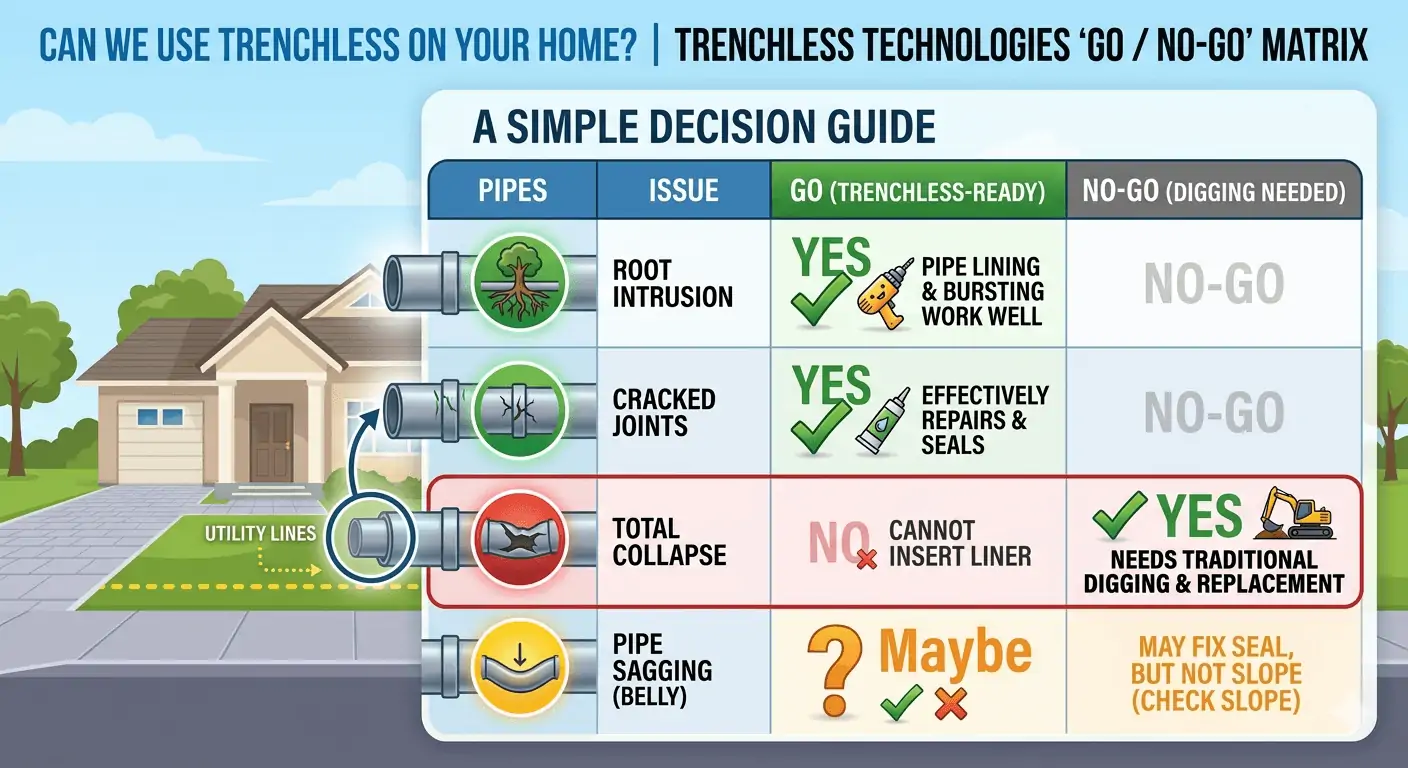
If the old pipe is too damaged to hold a liner, we use "bursting." Our team pulls a heavy, cone-shaped bursting head through the old line, shattering it into the surrounding soil while simultaneously pulling a brand-new HDPE (high-density polyethylene) pipe behind it [2].
Homeowners often experience sticker shock when seeing the "per foot" price of trenchless technology. However, we always advise looking at the *total* project bill, not just the plumbing line. Traditional digging looks cheaper until you factor in the $10,000+ required to replace pavers, sod, or porch structures.
| The Comparison | Trenchless (CIPP/Bursting) | Traditional (Dig & Replace) |
|---|---|---|
| Price per foot | $80-$250 (CIPP) / $60-$200 (Bursting) [1, 2] | $50-$250 (Pipe) + $75-$500 (Digging) [1, 2] |
| Yard Restoration | $0 - $500 | Up to $15,500 [1, 4] |
| Time | 1-2 Days | 5-10 Days |
| Bottom Line | Saves up to 40% in total costs | High hidden restoration costs |
*Note: You will also need permits from the local Department of Public Works (DPW). In some regions, specific environmental regulations like those from the IEPA apply [4].*
Trenchless is powerful, but it isn't a universal fix.
In our 15 years in the field, we have seen DIY attempts and "handyman" fixes result in massive city fines.
1. Permits are mandatory: In most jurisdictions, only licensed plumbers (operating under state codes like 225 ILCS 320) can legally pull these permits [4].
2. Call 811: Before any work begins, we call 811. This free service marks your underground gas and electric lines. Skipping this step is how a simple repair turns into a neighborhood evacuation [7].
When we finish a trenchless job, you aren't just patching a leak. You are installing a system designed to outlast a typical mortgage.
1. Get the Video: Stop guessing. Order a high-definition camera scan and keep the recording.
2. Check the Specs: Ensure your contractor uses materials certified by IAPMO R&T or NSF (National Sanitation Foundation). If the materials aren't certified, do not let them near your home [2, 8].
3. DIY vs. Pro: You should clear the path to your cleanout and check your insurance policy yourself. However, do not attempt to dig or pour chemicals down the line once a break is suspected—this can worsen the damage and increase repair costs.
Dealing with a failing sewer line is one of the most stressful experiences a homeowner can face. It feels like a threat to your sanctuary and your savings. But remember: technology has caught up to the problem. You don't have to choose between a working bathroom and a beautiful yard anymore. By choosing a trenchless solution, you are choosing the path of least disruption and the highest long-term security. We have seen these systems protect homes for decades, and they will do the same for yours. Take a breath, get the camera inspection, and let's fix this the right way—the first time.
[1] NuFlow: Cost of Sewer Pipe Repair CIPP — https://nuflow.com/blog/cost-of-sewer-pipe-repair-using-cipp-liner-per-foot/
[2] Fusion Cools: Pipe Bursting Cost Guide — https://fusioncools.com/pipe-bursting-sewer-line-cost/
[3] Angi: Trenchless Sewer Replacement Cost — https://angi.com/articles/trenchless-sewer-line-replacement-cost.htm
[4] Illinois EPA: Waste Water Permits & Regulations — https://epa.illinois.gov/topics/forms/water-permits/waste-water.html
[5] ASTM F1216-22 Standard Specification — https://astm.org/f1216-22.html
[6] WiseGuy Reports: Trenchless Repair Market Forecast — https://wiseguyreports.com/reports/trenchless-sewer-repair-service-market
[7] US DOT: Call 811 Before You Dig — https://transportation.gov/content/call-811-you-dig-1
[8] IAPMO R&T: Plumbing Certification Services — https://iapmort.org/certification-services/plumbing-certification
[9] Fortune Business Insights: Trenchless Market — https://fortunebusinessinsights.com/trenchless-pipe-rehabilitation-market-107720
[10] S3DA Design: Environmental Benefits of Trenchless — https://s3da-design.com/guest-contribution/the-green-choice-environmental-benefits-of-trenchless-sewer-repair/

 Verified by Carlos Rivera