24/7 Emergency Service | Licensed & Insured | Upfront Pricing.
 Call Now: (786) 638-7923
24/7 Emergency Service | Licensed & Insured | Upfront Pricing.
Call Now: (786) 638-7923


Nothing ruins a Miami morning faster than a cold shower. Our team has spent 15 years crawling into utility closets across South Florida, and we can tell you: most water heater issues don't require a total replacement. Often, it's just a tripped switch or a $30 part.
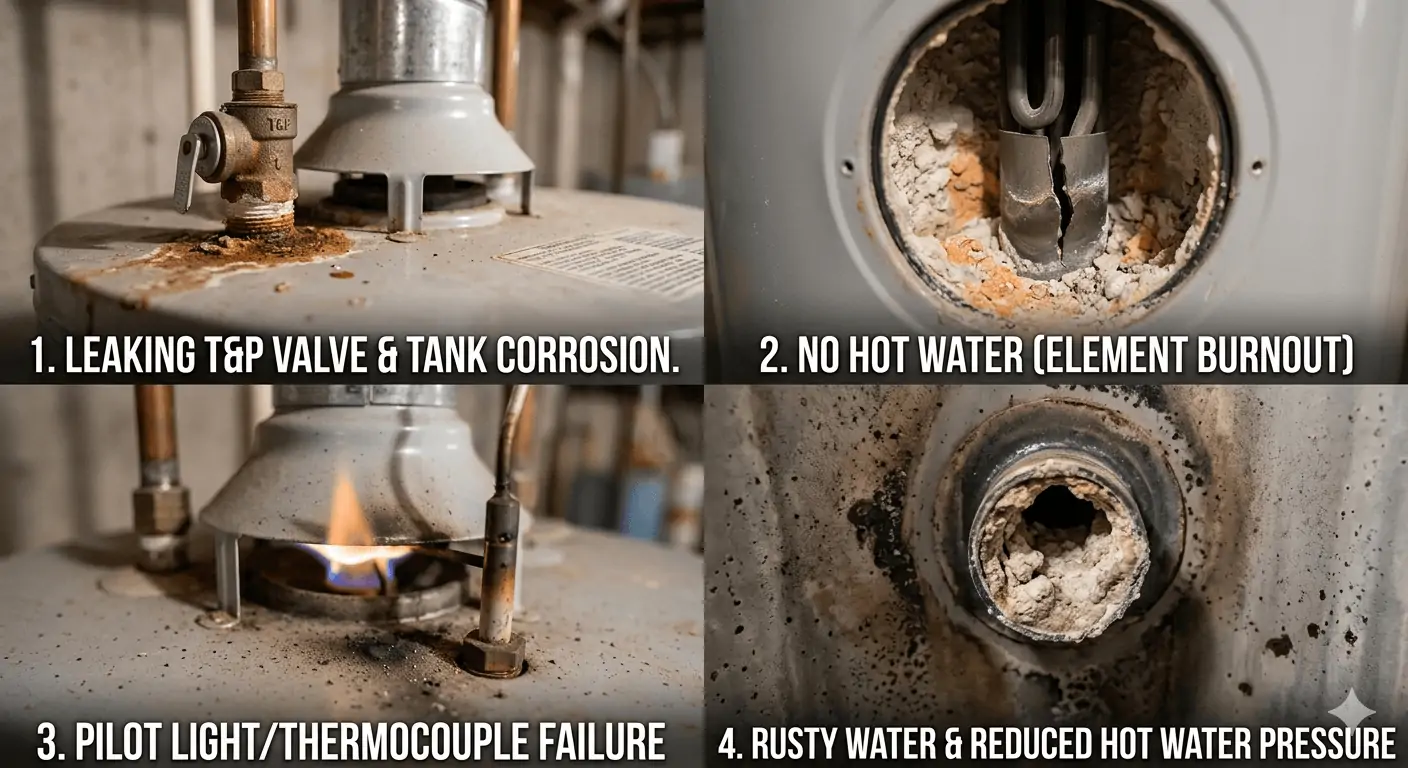
This guide is a "boots-on-the-ground" manual to help you figure out if you can fix the problem yourself in 20 minutes or if you need to call a pro before your laminate flooring ends up underwater.
When the water goes cold, don't grab a wrench yet. We recommend following this symptom-based logic to see where you stand:
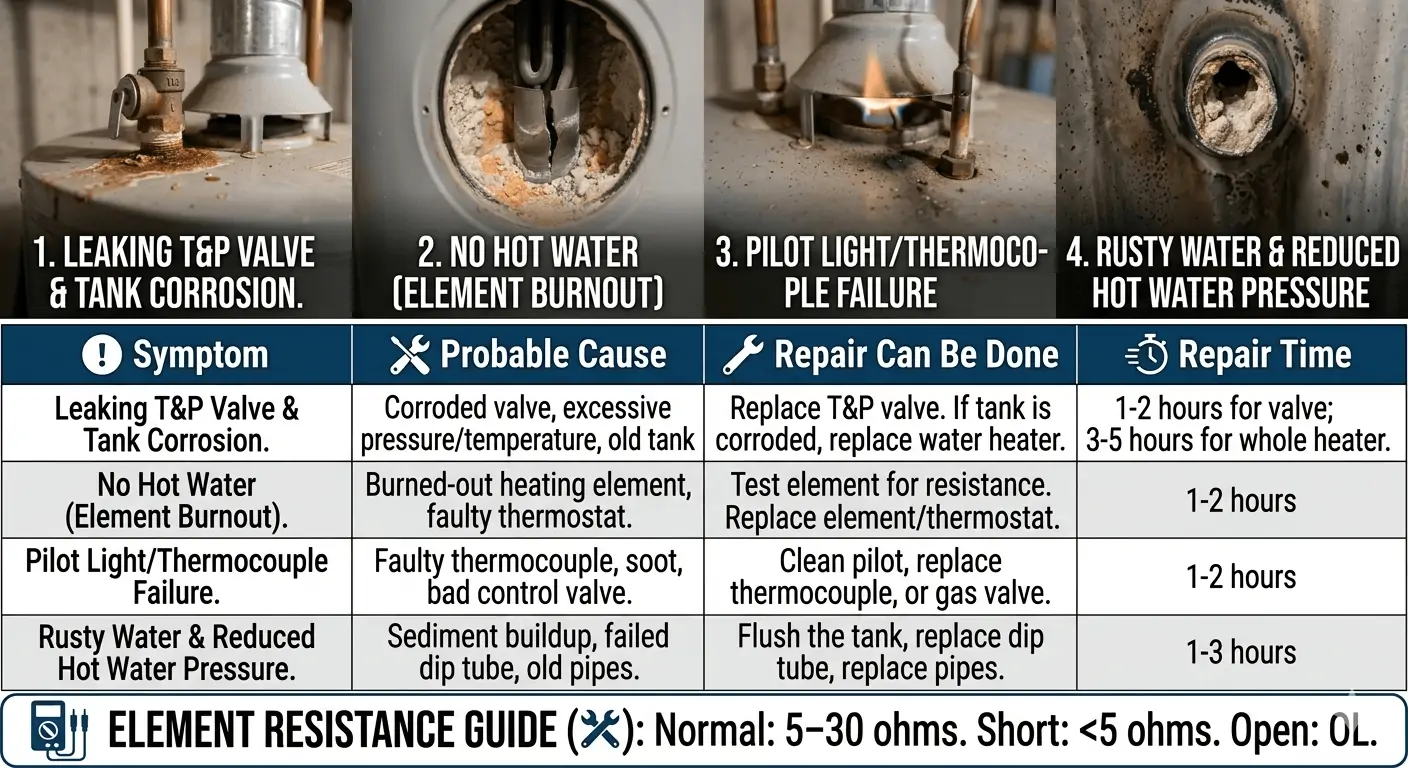
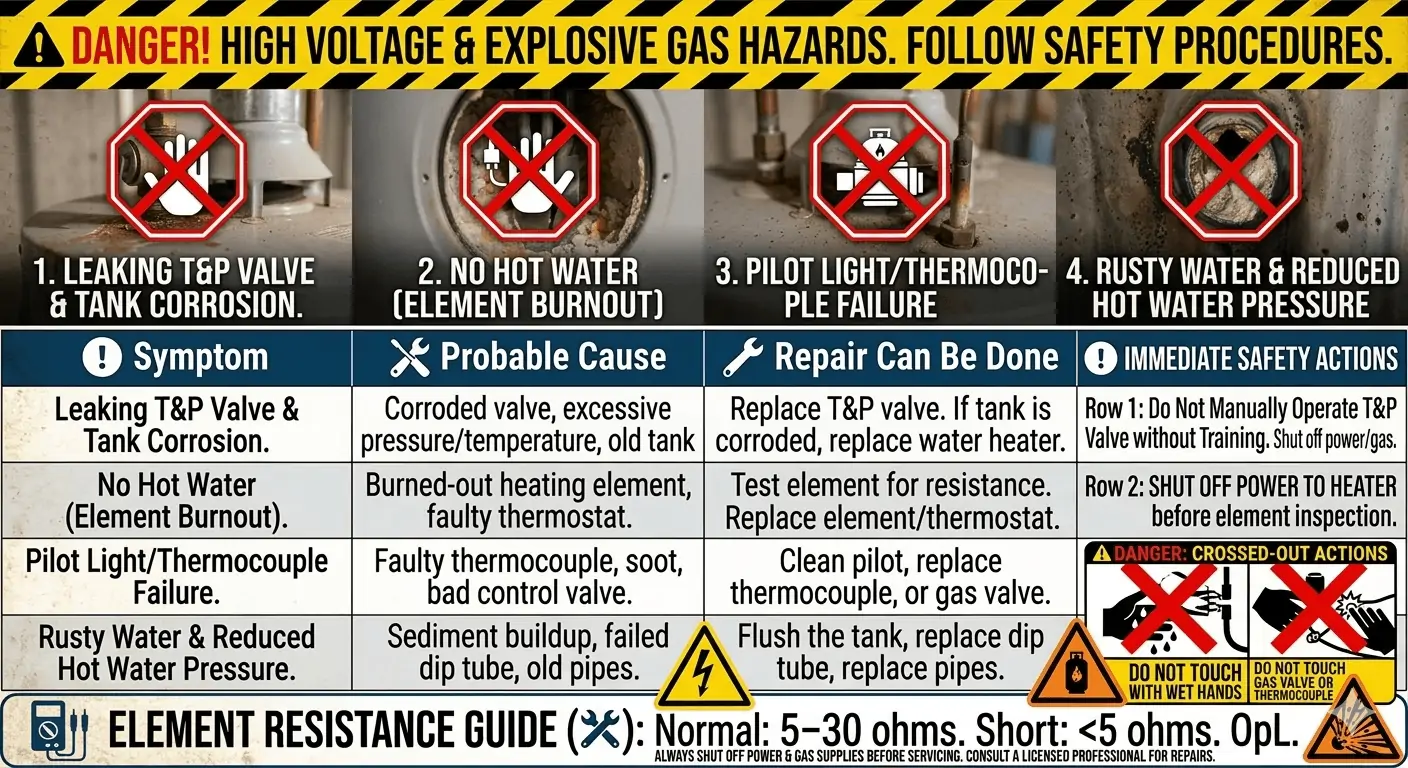
We are all for saving a buck, but some things are non-negotiable. If you see these signs, DIY time is over:
The real cost of a mistake:
In our experience, a botched DIY job on a water heater can lead to insurance companies denying your claim. We're talking about potential flood damages ranging from $8,000 to $15,000 [4]. If you aren't 100% confident, that "savings" isn't worth the risk.
Most electric tanks last 8-12 years, while gas or tankless units can push toward 20 [8]. If yours is in that window, try these steps in order.
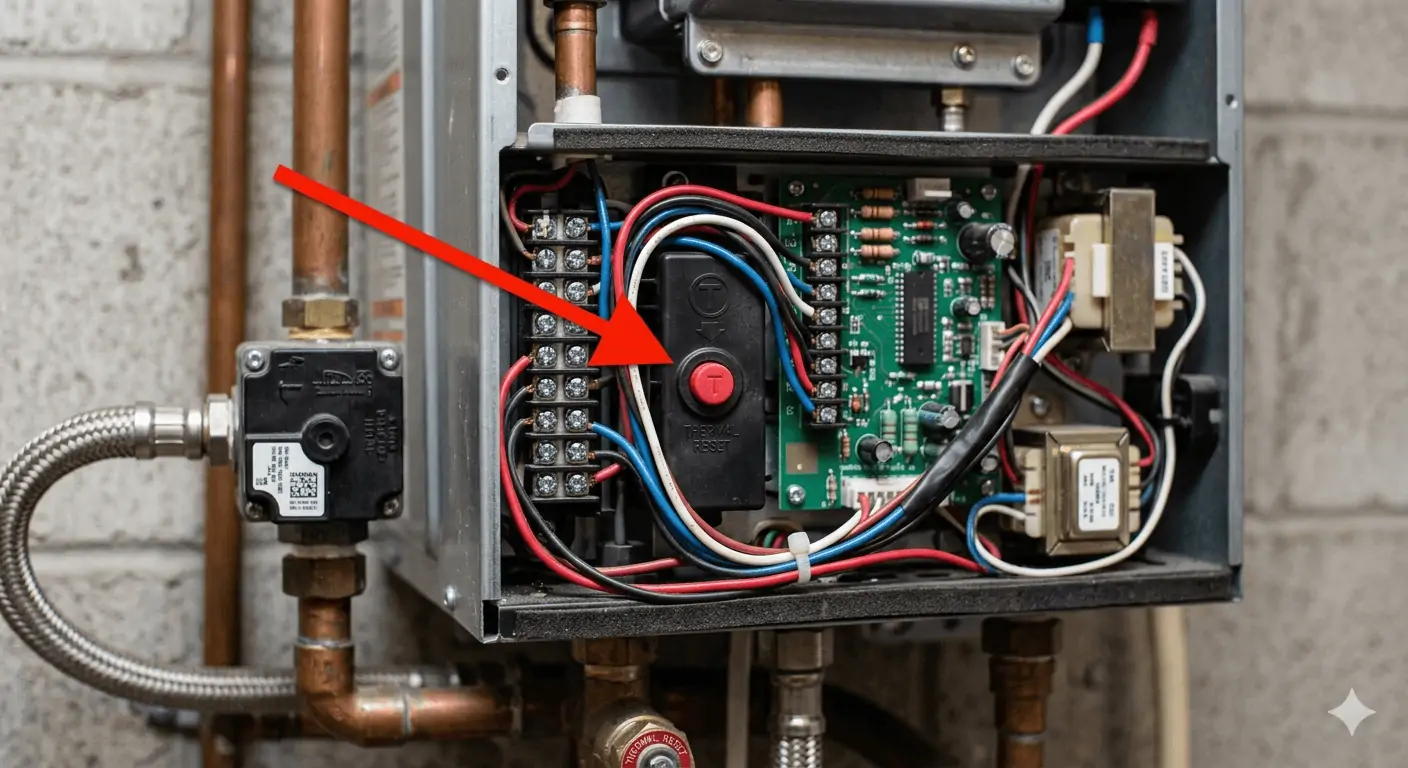
Electric heaters have a "bouncer" called the ECO (emergency cut-off). If the water hits a dangerous 180F (82.2C), the ECO cuts the power to prevent a literal explosion [1], [2].
How to fix it:
1. Safety first: turn off the power at your main breaker panel.
2. Remove the metal access panel on the side of the heater.
3. Push the red button. If you hear a "click," that was your problem.
4. Put the cover back on and flip the breaker.
If the reset didn't work, your heating element (the TÈN) might be fried. You'll need a $15 multimeter (device for measuring electricity) for this.
The "Health Check":
1. With the power OFF, disconnect the two wires from the element.
2. Set your multimeter to Ohms (Ω).
3. Touch the probes to the two screw terminals.
4. The Verdict: a healthy element reads between 5 and 30 Ohms [3]. If it says "0," it's shorted. If it says "OL" or "Infinity," the wire inside has snapped [3].
If you have a gas heater and the water is cold, 90% of the time the pilot light went out. If it won't stay lit, your thermocouple (the little copper rod by the flame) is likely shot. It's a safety sensor—if it doesn't feel heat, it shuts off the gas so your house doesn't fill with fumes. Replacing this costs about $20 in parts but requires working with gas lines—call us if you feel even slightly unsure.
If your heater sounds like it's boiling rocks, that's exactly what's happening. In Miami, our hard water leaves calcium and magnesium deposits (sediment) at the bottom of your tank. Steam bubbles get trapped under this "crust" and pop.
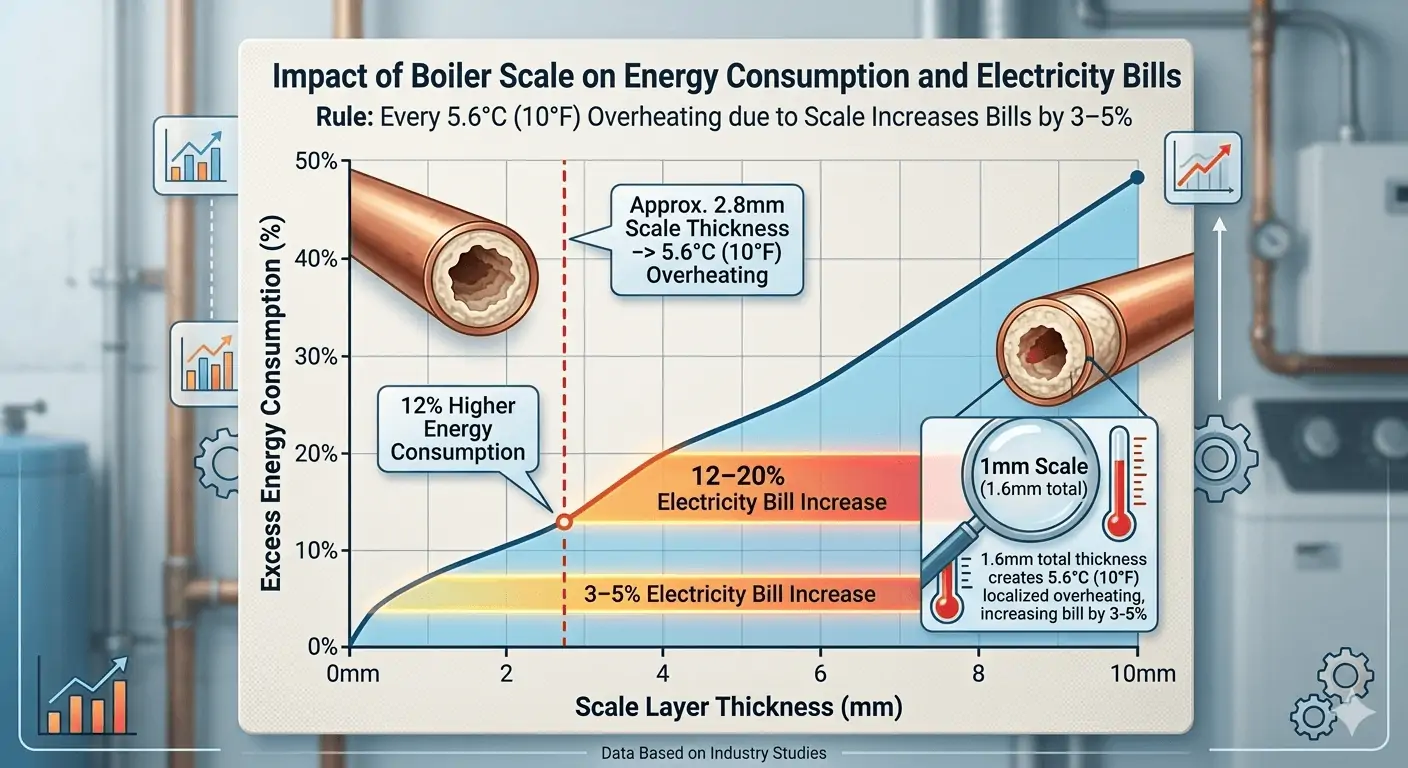
Every 10F (5.6C) of overheating caused by that gunk adds about 3-5% to your bill [2]. Cleaning your tank isn't just about the noise; it's about keeping your money in your pocket.
Inside your tank is a magnesium rod. Its only job is to rust so your tank doesn't. We recommend checking this every 1-2 years [1], [4]. Once the rod is gone, the water starts eating your tank's steel walls next.
The Quick Flush:
1. Turn off the power/gas and the water supply.
2. Connect a garden hose to the drain valve at the bottom.
3. Drain the tank to flush out the "rocks" (sediment).
4. Unscrew the old anode from the top and swap in a new one if it looks like a chewed-up pencil.
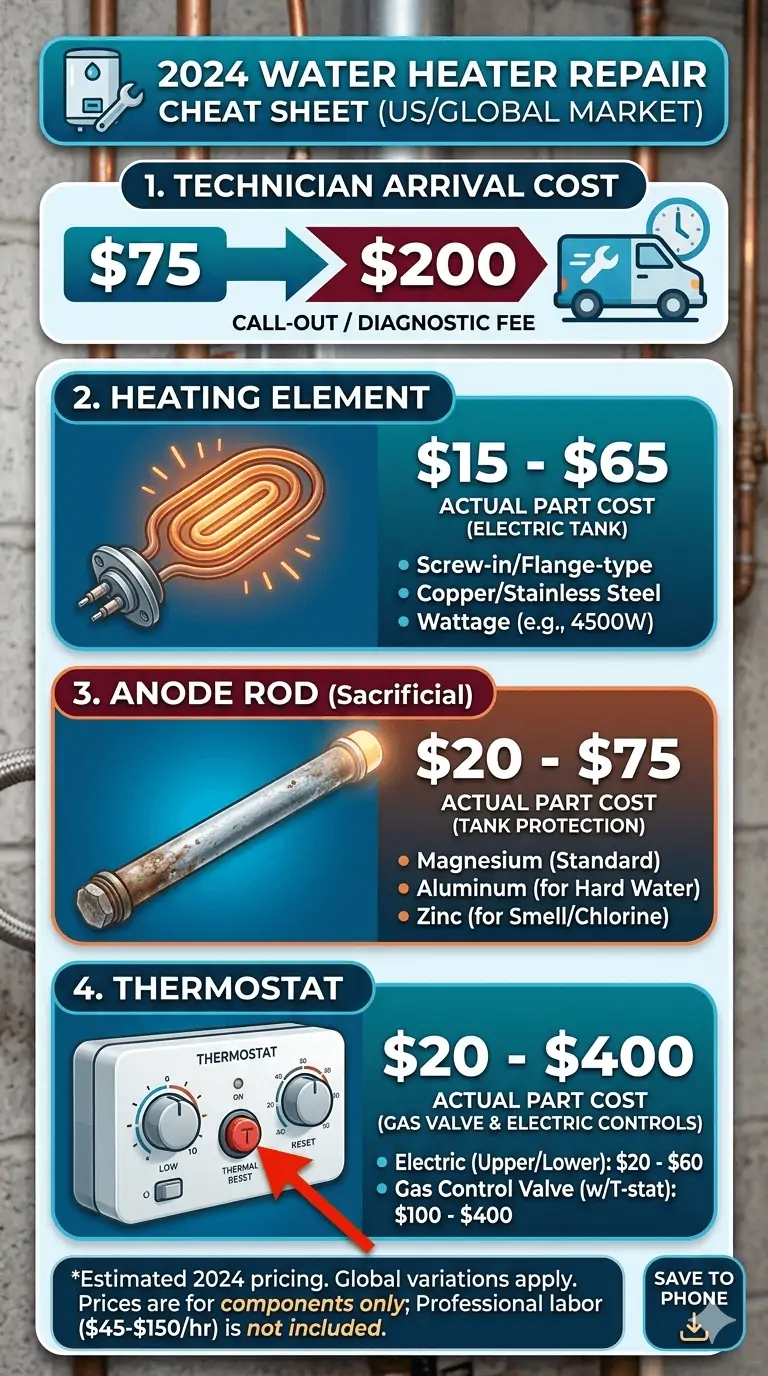
If you decide this job is too big, don't go in blind. Here is the 2024 market reality:
[1] Panther RV Products: Dometic ECO Specifications and Temperature Modes — https://pantherrvproducts.com
[2] GE Appliances Support: ECO Reset Protocols and Energy Efficiency — https://www.geappliances.com/support
[3] Splash Plumbing / A.O. Smith: Diagnosing Heating Element Resistance — https://www.hotwater.com
[4] Modernize / Angi: Repair Cost Statistics and DIY Risks (2024-2026) — https://modernize.com
[5] PMC (National Library of Medicine): Legionella Research and Temperature Regimes — https://www.ncbi.nlm.nih.gov/pmc/
[6] AppliancePartsPros Forum: Dry Fire Element Burnout Cases — https://www.appliancepartspros.com
[8] Fuseservice / Apollo Home: Water Heater Lifespan Analytics — https://fuseservice.com

 Verified by Carlos Rivera